

Updated September 2026
Data Analyst
- Top tier professionals
- US experience
- Your same timezone
- Cancel anytime
+370 COMPANIES TRUST US
and we’ve placed more than 750 professionals
The Power of Data Analytics
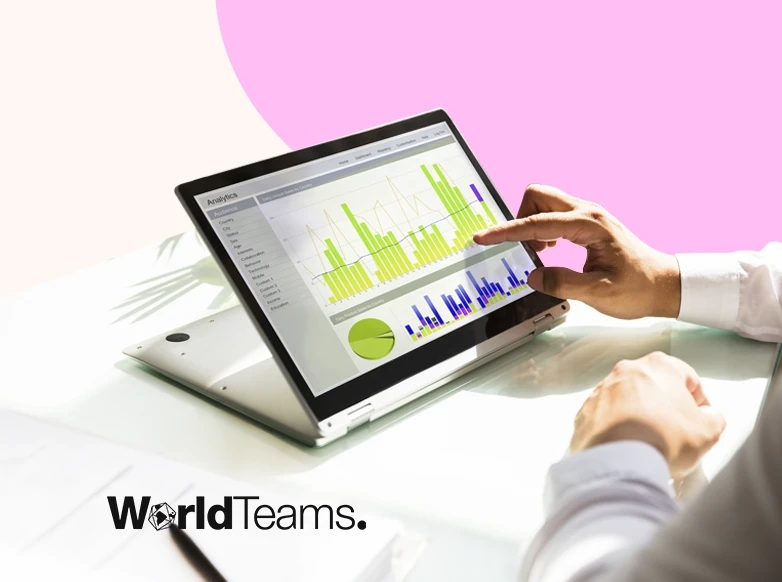
A Data Analyst translates complex data sets into actionable insights with real business impact. This process involves statistical analysis, data mining, and cutting-edge machine-learning techniques. The goal? Transforming raw data into clear, actionable intelligence that informs better strategies across various departments—from marketing and operations to resource allocation and investment.
Imagine an e-commerce business leveraging a data analyst’s expertise in data analytics to understand customer behavior. Analyzing data allows them to personalize marketing campaigns to target specific customer segments, ultimately driving sales and customer satisfaction.
Data-driven decision-making is a game-changer across industries, and data analysts are the masterminds behind this transformation.
What does a Data Analyst do?
Data analysts are the ultimate data wranglers, but their core function revolves around translating complex data sets into actionable insights with real business impact. Let’s dissect their key responsibilities:
Data Collection and Interpretation
The data analyst’s journey begins with identifying, gathering, and importing relevant data from various sources like websites, social media, and business applications. Understanding the context behind the data and assessing its quality are crucial steps.
Data Cleaning and Organization
Raw data rarely arrives in a pristine state. Data analysts meticulously clean the data by fixing inaccuracies, managing missing values, and structuring it into a well-organized database. Tools like Excel, SQL, Python, and R are useful during this critical stage.
Unearthing Insights Through Analysis
Here’s where the data comes alive! Data analysts leverage statistical modeling, machine learning, and data visualization tools to uncover hidden patterns, trends, and insights within the data. They employ regression analysis, predictive modeling, and data visualization techniques to answer pressing business questions.
Communication
A data analyst’s job doesn’t end with analysis. Effectively communicating findings to stakeholders is paramount. They craft clear, concise reports, interactive dashboards, and captivating data visualizations using tools like Tableau and Power BI. Translating technical jargon into clear narratives ensures executives can make informed decisions about the future of the business.
Now, let’s look at some examples of Data Analysts working across various industries.
E-commerce
A data analyst working for an e-commerce company might analyze customer purchase history, website traffic patterns, and social media engagement to understand customer behavior. They can use this data to identify trends, personalize marketing campaigns, and optimize product recommendations.
Finance
In finance, a data analyst might examine financial data to assess risk, identify fraud patterns, and develop investment strategies. They may use statistical modeling and machine learning to predict market trends and make data-driven client recommendations.
Healthcare
Data analysts in healthcare play a crucial role in improving patient care. They might analyze patient records to identify potential health risks, track the effectiveness of treatment plans, and measure the quality of care provided. This data can be used to develop preventative measures, improve treatment protocols, and allocate resources more effectively.
These are just a few examples. Data analysts are truly valuable across various industries. Their ability to translate data into actionable insights helps organizations make informed decisions, improve efficiency, and achieve their goals.
Ready to make data-driven decisions for your business?

Our Approach to Data Analysis
Nowadays, information is abundant, but true insights are rare. At WorldTeams, our expert data analysts are the key to unlocking the hidden potential within your data, transforming it into actionable strategies that fuel business growth.
But what sets our data analysts apart? The unique combination of technical prowess and soft skills allows them to become trusted advisors, collaborating with you to achieve your specific goals.

Technical Expertise
Our data analysts are fluent in the language of data, wielding a powerful tech stack to extract meaningful insights.
SQL: They expertly query your databases, pinpointing the exact data you need to answer your pressing business questions.
Excel: Data organization, analysis, and visualization are second nature to our analysts. They leverage Excel’s power to transform raw data into clear and understandable information.
Data Visualization: Compelling narratives come alive through interactive dashboards built with tools like Tableau. Complex trends and patterns become readily apparent, empowering informed decision-making.
Statistics: From understanding core statistical concepts to wielding powerful languages like Python or R, our analysts can uncover hidden patterns and make data-driven predictions tailored to your unique needs.
Machine Learning: Our team stays ahead of the curve as the world embraces AI. Our understanding of machine learning allows us to identify patterns, automate tasks, and unlock even deeper insights from your data.
Soft Skills
Beyond technical prowess, our data analysts excel in the art of communication and storytelling.
Communication: They translate complex data findings into actionable recommendations that resonate with all levels of your organization, technical and non-technical.
Storytelling: Data is a powerful story waiting to be told. Our analysts craft compelling narratives that bring your data to life, ensuring your message is heard loud and clear.
Visualization: They design captivating charts and graphs that look good and effectively communicate the insights hidden within your data.
Critical Thinking: Asking the right questions and approaching problems analytically are ingrained in our data analysts’ DNA. They identify patterns, solve problems, and draw insightful conclusions that propel your business forward.
Creative Problem-Solving: Thinking outside the box is a core tenet. Our analysts use their creativity to find innovative ways to analyze data, solve challenges, and present findings in ways that maximize impact.
After all this information, you might be wondering where Artificial Intelligence takes place in the field. Let’s dig in.

Data Analysis and Artificial Intelligence
The rise of Artificial Intelligence (AI) has sparked debates about its impact on many professions, including data analysts. Fear not! Here’s a more nuanced perspective: AI will unlikely replace data analysts entirely, but it will transform the role. The key takeaway? Data analysts who embrace AI as a powerful tool will be the most sought-after.
A Skills-Driven Future
While AI may automate routine tasks like data cleaning and basic analysis, freeing data analysts to focus on higher-level thinking, foundational skills like problem-solving, analytical judgment, and insight generation will remain critical. The good news? AI presents an opportunity for data analysts who are proactive about learning and integrating it into their skills. Here’s why embracing AI is a smart move:
Increased Efficiency
Generative AI can automate time-consuming tasks like data cleaning, freeing up valuable time for higher-level analysis and strategic recommendations.
Deeper Insights
AI’s ability to analyze massive datasets can uncover hidden patterns and insights that humans might miss. This leads to more nuanced findings with greater business impact.
New Career Paths
The intersection of data analysis and AI creates exciting new roles like AI Ethics Officer and AI Security Specialist. By developing AI expertise, you can unlock new career possibilities.
The data analysis field is evolving, but the core skills remain essential. By embracing AI as a powerful tool added to our professionals’s analytical and communication skills, our Data Analysts thrivein this exciting new era.
Let’s Unlock Data-Driven Decisions
Ready to leverage the power of data to optimize your business strategy but daunted by the prospect of tackling it alone? WorldTeams Data Analyst Services is here to help! Just like you wouldn’t DIY your outdoor cooling solution, leave the complex world of data analysis to our qualified professionals.
Here’s why WorldTeams is your perfect partner:
Top-Tier Global Professionals: Say goodbye to unreliable freelancers and hello to confident, qualified professionals who understand your vision.
Maximize Efficiency: Our teams are built with efficiency in mind. We match you with the perfect skillset and experience to complete the job, saving you time and money.
Flexible Contracts: There are no long-term commitments or hidden fees. You can choose contracts that suit your project and budget and cancel anytime without hassle.
US Experience & Fluent English: Seamless communication is key. Our professionals have a proven track record of successfully collaborating with US clients and are fluent in English, eliminating language barriers.
Same Timezone Collaboration: Avoid scheduling headaches! We match you with professionals in the same time zone, ensuring convenient communication and smooth project progress.
Don’t settle for basic data analysis. Partner with WorldTeams and unlock the power of data-driven insights to propel your business forward. Contact us today for a free consultation and discover how our data analysts can help you achieve your goals!

Looking to make smarter business decisions?
Frequently Asked Questions
What does a data analyst do that a good spreadsheet does not?
Answers questions that span more than one system. A spreadsheet is excellent at one dataset that one person maintains. An analyst pulls from several sources at once: your accounting system, your project tool, your CRM and your time tracking. They join those together and produce something that stays current without being rebuilt each month. They also do the part spreadsheets never do well. Checking whether the numbers are actually right. Documenting what each measure means, and saying when the data cannot support the conclusion somebody wants. Where the need is a better workbook rather than a whole reporting layer, an Excel specialist is the less expensive and more appropriate answer. We will say so rather than sell the larger role. A reporting layer built for a problem a spreadsheet already solves is money spent on nothing.
Which questions can an analyst actually answer for a firm like ours?
The ones your systems already have the data for, which is more than most firms realize. In a design or construction business that usually means project profitability by type, by client and by team. Utilization and capacity against the pipeline. Estimate accuracy against actual cost, which is the number that quietly decides whether a firm makes money. Where inquiries come from and which sources produce work that closes. Change order frequency by project type. Cash flow patterns and the seasonality nobody has plotted. What an analyst cannot do is answer a question your systems never recorded in the first place. That gap is usually the first finding of any engagement. Fixing it is a process change rather than an analysis one, and that change belongs to your firm rather than to us.
What does our data have to look like before analysis is useful?
Consistent enough to trust, which is a lower bar than clean. What matters is that the same thing is recorded the same way: one project code, one client name, one way of categorizing a cost. Where that is not true, the first phase of any engagement is finding and reconciling the differences. That is normal rather than a sign of failure. Data does not need to be in one place, since an analyst can pull from several systems. It does need to be exportable, and it does need somebody who can explain what the fields actually mean. Expect the first month to produce uncomfortable findings about your own records. That is the analysis working rather than the analyst complaining, and it is usually the most valuable output of the first month.
Which tools do remote data analysts work in?
SQL first, because almost everything else sits on top of it. Then a visualization layer. Power BI and Tableau are the most common, with Looker Studio for lighter needs. Excel still does real work in most firms. Python or R appear where statistical analysis or forecasting is involved. Beyond the list, the useful question is where the results will live. A dashboard that nobody actually opens is worth precisely nothing. So the output usually belongs where people already work: a weekly email, a report inside your project system, or a screen in the studio. Licenses stay in your name and the data stays in your systems. Tell us which tools you already pay for before anyone proposes buying a new one. Most firms are already licensed for far more than they use.
Do we need an analyst or a data engineer?
An analyst, almost certainly, and this is worth being blunt about. An analyst answers questions using the data you already have. A data engineer builds infrastructure to move and store data at a scale most firms never reach. The mistake we see is a business being sold a data platform when what it needed was somebody to answer five questions well. Start with the analyst. Do they consistently spend most of their time extracting and reconciling data rather than analyzing it? That is the honest signal that engineering work would pay for itself. Until then it is simply infrastructure with no return on it. We would rather tell you that than build it and invoice for it. That would be a short-term win for us and a long-term problem for you.
Explore other Most Wanted Professionals













More on technology and delivery
Browse all articles →
Think You Can’t Afford 3D Renders? Think Again
Think 3D renders are out of reach? Discover how outsourcing makes high-quality visualizations, boosting projects without breaking the bank.
Read article →
You Won’t Believe What CAD to BIM Conversion Can Do For Your Project
Discover how CAD to BIM conversion revolutionizes architectural projects, boosting efficiency, cutting costs, and enhancing collaboration.
Read article →
Architectural CGI: Transforming the Way We Visualize Buildings
Discover how architectural CGI are changing building design. Explore its benefits and outsourcing solutions with WorldTeams.
Read article →