
Updated September 2026
HVAC Services
- Top tier professionals
- US experience
- Your same timezone
- Cancel anytime
+370 COMPANIES TRUST US
and we’ve placed more than 750 professionals
What is an HVAC Engineer?
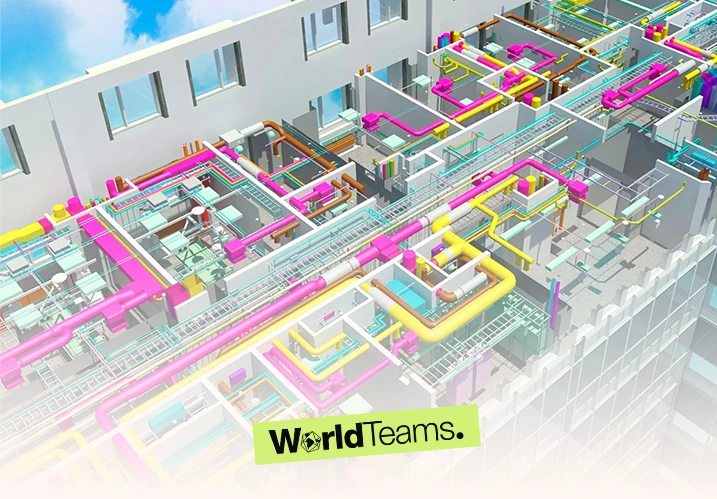
In the planning stages of a new building, whether commercial or residential, extensive thought is given to designing and integrating various systems, including HVAC services, electrical wiring, and plumbing. HVAC engineers play a crucial role by designing efficient heating, ventilation, and air conditioning systems that seamlessly fit within the building’s blueprints.
They require creativity to maximize space utilization while optimizing system performance to achieve this. This expertise necessitates a strong understanding of load calculations, relevant construction techniques, and adherence to local building codes. Once the plans are finalized, HVAC engineers typically oversee the installation of the HVAC system and may even be available for post-construction troubleshooting and adjustments.
What does an HVAC Engineer do?
HVAC engineering plays a vital role in the construction of new buildings. HVAC designers are responsible for designing efficient systems that control both air quality and temperature. This includes planning for ventilation, heating, and air conditioning (HVAC) to seamlessly integrate with the building’s overall plan, alongside other crucial systems like plumbing and electrical wiring.
The HVAC design process begins with the engineer evaluating the needs of the building occupants and the specific type of structure. Factors like the building’s square footage, daily usage patterns, and local energy costs are all considered to create an optimal HVAC system.
HVAC engineers then translate their concepts into detailed layouts and diagrams that specify the various components of the system. Their focus is on maximizing both efficiency and space utilization. This involves selecting appropriate materials, calculating estimated costs, and ensuring the design adheres to building codes.
The engineer’s role extends beyond design. They plan and supervise every stage of the installation process, ensuring that personnel follow safety protocols and adhere to the approved HVAC design. Once installed, the system is rigorously tested to ensure proper functionality. The engineer may also meet with building inspectors and clients throughout the process.
HVAC services don’t end with construction. The engineer may be available for post-construction consultations, offering recommendations for system improvements or performing evaluations to optimize performance. HVAC engineers typically work in office environments but will visit job sites as needed to oversee installations and address any concerns.
Ready to design your dream HVAC system?

HVAC Systems: Design, Integration, and the Importance of Efficiency
HVAC engineering is crucial for creating comfortable and healthy indoor environments. It integrates three key functions: heating, ventilation, and air conditioning (HVAC). These functions are intrinsically linked, as the goal is to achieve thermal comfort and acceptable indoor air quality while considering factors like installation, operation, and maintenance costs.
HVAC systems can be applied in both residential and commercial settings. They provide heating, cooling, and ventilation and manage pressure relationships between spaces. The method of distributing and removing air within a space is called room air distribution.
Individual Systems
Modern buildings require a comprehensive approach, integrating design, installation, and control systems for these functions into one or more comprehensive HVAC systems. Contractors assess the required capacity and system type for smaller buildings before designing and selecting the appropriate refrigerant and components. Larger buildings involve specialized professionals like HVAC designers or building services engineers who analyze, design, and specify the HVAC systems. These systems are fabricated, installed, and commissioned by specialty HVAC contractors and suppliers. Building permits and code-compliance inspections are mandatory for HVAC installations in all building sizes.
District Networks
While HVAC systems are typically designed for individual buildings, there are instances where the equipment functions as an extension of a larger district heating (DH), district cooling (DC) network, or a combined DHC network. In such cases, operation and maintenance are simplified, and metering becomes essential for billing energy consumption and potential energy returned to the larger system. For example, a building might utilize chilled water for air conditioning. In contrast, the returned warm water can be used for heating in another building or contribute to the overall heating portion of the DHC network (potentially with additional energy to boost the temperature).
Leveraging a larger network for HVAC services offers economies of scale, often unattainable for individual buildings. This approach facilitates using renewable energy sources like solar heat, winter chill, or lake/seawater cooling in specific locations. Furthermore, it enables the integration of seasonal thermal energy storage. Utilizing natural resources for HVAC systems can significantly benefit the environment and promote innovation using diverse methods.
The Skills that Make a Great HVAC Engineer
Have you ever considered the invisible hand that keeps your office building comfortable in the summer and cozy in the winter? That invisible hand belongs to the skilled professional known as the HVAC engineer. But what exactly does it take to excel in this field? Let’s delve into the essential skills that make a great HVAC engineer.
Technical Expertise is Key
- HVAC Design: Understanding the fundamentals of thermodynamics, fluid mechanics, and heat transfer is crucial for designing efficient and effective HVAC systems.
- Building Systems Knowledge: HVAC engineers need a strong grasp of building codes, construction techniques, and how HVAC systems integrate with other building systems like plumbing and electrical.
- Software Proficiency: Modern HVAC design relies heavily on Computer-Aided Design (CAD) software and Building Information Modeling (BIM) tools.
Beyond the Technical
- Problem-Solving Skills: Troubleshooting complex system issues and finding creative solutions to ensure optimal performance is a core responsibility.
- Communication Skills: Communicating technical concepts to clients, contractors, and other engineers is essential for successful project execution.
- Attention to Detail: HVAC systems have numerous components, and meticulous attention to detail is vital to ensure proper installation and functionality.
- Project Management Skills: Many HVAC engineers oversee projects from design to installation, requiring strong organizational and project management skills.
The Desire to Learn and Adapt
HVAC engineering is constantly evolving, with new technologies and regulations emerging. A successful engineer thirsts for knowledge and the ability to adapt to these changes.
Bonus skills include understanding sustainability principles that allow for the design of energy-efficient HVAC systems, and customer service skills can be valuable when dealing with building occupants or clients.
By honing these core skills, HVAC engineers play a vital role in creating comfortable, healthy, and energy-efficient indoor environments.
Partnering with WorldTeams
We help companies build international teams that maximize efficiency. The world has changed, if a job can be done virtually, it makes no sense to reduce your talent options to the region you are in. Our talent solution helps you find and manage the best professionals as if you had an external HR office. What makes us different is the experience and skills of our people and our completely unconventional approach to outsourcing.
What makes our talent different?
1. Work in your same time zone: collaborate in real-time, leading to faster decision-making and problem-solving.
2. US work experience + Fluent English speakers: possess the ability to communicate effectively, verbally, and in writing with clarity & accuracy.
3. Only the top 3% of talent with recruiting rigorous pre-screening.
4. Professionals with a degree with expertise and specialized knowledge.
5. Highly skilled professionals: sophisticated understanding of software applications, tools, and new technologies.
Contact us for a free consultation today, and let’s build amazing things together!

Hire an HVAC Specialist now!
Frequently Asked Questions
What does a remote HVAC engineer actually do on a U.S. project?
A remote HVAC engineer sizes, designs, and documents the mechanical systems on your projects as part of your team. Day to day that means heating and cooling load calculations, equipment selection, and equipment schedules. It also means duct and hydronic piping layouts, ventilation design, and the mechanical sheets in the construction set. During construction they mark up existing conditions and turn around contractor questions. What does not move is the judgment. Your firm decides which system type the building gets, what the client is told, and what leaves the office. The professional works inside your process rather than taking the scope out of it. You interview and approve the specific person before they start. That same person works on your projects every day. The engineer sits under the same MEP umbrella as your electrical and plumbing scopes, so one coordination habit covers all three.
Which HVAC deliverables can I hand off without having to redo them in house?
Load calculations, equipment schedules, duct and piping layouts, ventilation compliance, and the coordinated mechanical drawing set. Those pieces consume senior hours without needing senior judgment, so they are the ones firms hand off first. A remote HVAC engineer runs the block and room loads, then selects equipment against them. Distribution is laid out to fit the architectural ceiling plan. Schedules, details, and riser diagrams come back matching the plans. Energy modeling and commissioning support usually follow once the working relationship is established. The engineer follows your title blocks, sheet numbering, and layer standards, so the set looks like your set. Your reviewer still signs off on the design before it goes out. Does the same job need electrical and plumbing too? Then the mechanical scope pairs with a full engineering outsourcing team instead of being split across vendors.
Do remote HVAC engineers design to ASHRAE standards and the International Mechanical Code?
Yes, and we screen for that familiarity before presenting a candidate. Mechanical design for U.S. projects runs on the International Mechanical Code and the International Energy Conservation Code, both published by the ICC. On top of those sit ASHRAE standards for ventilation, thermal comfort, and energy performance. NFPA requirements apply where smoke control and fire protection touch the mechanical scope. State amendments sit above all of it, and California Title 24 is its own layer again. The engineers we place have worked to that stack on U.S. projects and document in imperial units. During onboarding they adapt to the jurisdictions your work concentrates in, and to your firm's own details. Ask any staffing partner how they verify code familiarity before you sign anything. The answer tells you how much of your reviewer's time you are about to spend on rework.
Which software do remote HVAC engineers use, and can they work in our own Revit templates?
They work in your stack, on your templates. Mechanical production runs in Revit MEP and AutoCAD MEP. Load and energy calculations run in tools such as Trane TRACE and Carrier HAP, or the equivalent package your office already licenses. Coordination happens in Navisworks and BIM 360 alongside the rest of the model. Your templates, families, view standards, and naming conventions are picked up during onboarding rather than replaced with somebody else's. Firms that model mechanical inside a federated BIM model usually pair the HVAC engineer with a BIM Modeler who keeps the central file healthy. If your office still documents mechanical in AutoCAD, that is what the engineer works in. Software licenses stay in your name. Nothing about your workflow has to change for the person to start producing. Bring us one bottleneck in your mechanical pipeline and we will tell you whether this fits.
When does it make sense to add HVAC capacity remotely instead of hiring another mechanical engineer?
When the mechanical workload is real but a permanent hire is a bet on the next twelve months. Mechanical demand moves with the project mix. A local hire commits your firm through the slow stretch as well as the busy one, after a recruitment cycle that runs months. A remote HVAC engineer scales with the pipeline instead. They work your hours in your time zone, and the engagement carries a written replacement if the match is wrong. Onboarding for a standard mechanical profile takes less than 72 hours once you have selected the person. Highly specialized roles take longer, usually five to seven business days. The practical test is simpler than a forecast. If your senior mechanical staff spent last month drawing instead of designing, the bottleneck is production capacity. Start with one role and see how it holds before you decide on a second.
Explore other Most Wanted Professionals






More on engineering support
Browse all articles →
‘Near Me’ Is the Worst Way to Staff Your Firm in 2026
Searching “best architect staffing agency near me”? In 2026 “near me” is the wrong filter. The 7 things that actually matter when vetting a staffing partner.
Read article →
Steel Frame vs Wood Frame: What Builders Need to Know
A guide for builders comparing construction methods, timeline, and performance of steel frame vs wood framing.
Read article →
Passive House Design: Maximizing Energy Efficiency
Discover how passive house design maximizes energy efficiency, reduces costs, and shapes the future of sustainable architecture.
Read article →