Stop Hiring Local and Start Scaling Your Home Building Business in 2026

The Evolving Landscape of Home Building in 2026
The construction industry has entered a transformative era where traditional growth strategies are being challenged by rapid technological shifts and a shrinking local talent pool. For many company owners, the realization that leveraging the power of outsourcing builders is no longer a luxury but a necessity has become the defining factor between stagnation and success. As we navigate the complexities of 2026, the reliance on a purely local workforce often leads to bottlenecks that prevent firms from taking on more ambitious projects.
Residential construction demand remains high, but the infrastructure to support that demand is struggling under the weight of rising overhead and a lack of qualified administrative and technical staff. Forward-thinking business owners are shifting their perspective to view their team as a global entity rather than one confined by geography. This evolution allows for a more flexible, resilient business model that can adapt to market fluctuations without the heavy burden of fixed local costs.
By embracing a more modern approach, you can ensure that your core onsite team focuses on what they do best: physical construction and quality craftsmanship. Meanwhile, the intricate web of planning, drafting, and administration can be handled by specialized professionals regardless of their physical location. This separation of duties is the cornerstone of scaling a home building business in the current economic environment.
Why Local Hiring Limits Your Scaling Potential
For decades, the standard operating procedure for home builders was to hire everyone from the same zip code. While local knowledge is invaluable for onsite labor, applying this same logic to design, project management support, and administration creates unnecessary limitations. The primary issue with a local-only hiring model is the restricted talent pool, which often forces owners to settle for “good enough” rather than “exceptional.”
Furthermore, the costs associated with local employees in 2026 have reached unprecedented levels. Between competitive salaries, benefits, office space, and specialized equipment, the overhead required to maintain a full-time in-house staff can erode profit margins quickly. When you are restricted to local talent, you are also at the mercy of local economic shifts, where a sudden spike in demand for workers can leave you unable to fill critical roles.
Another often-overlooked limitation is the lack of scalability. When a business relies solely on local hires, adding a new team member involves a lengthy recruitment process, physical space considerations, and significant onboarding time. This slow pace makes it difficult to react to new opportunities or scale down during temporary lulls, leading to either missed revenue or financial strain during quiet periods.
while hiring the best talent in 2026

The Strategic Advantage of Outsourcing Builders
The modern construction firm functions best when it operates with lean efficiency, and this is where the concept of outsourcing builders truly shines. This strategy involves delegating specific, non-manual tasks to a specialized offshore team that understands the architectural and engineering requirements of the building industry. It is not just about cost savings; it is about accessing a level of expertise that might be unavailable or unaffordable in your immediate vicinity.
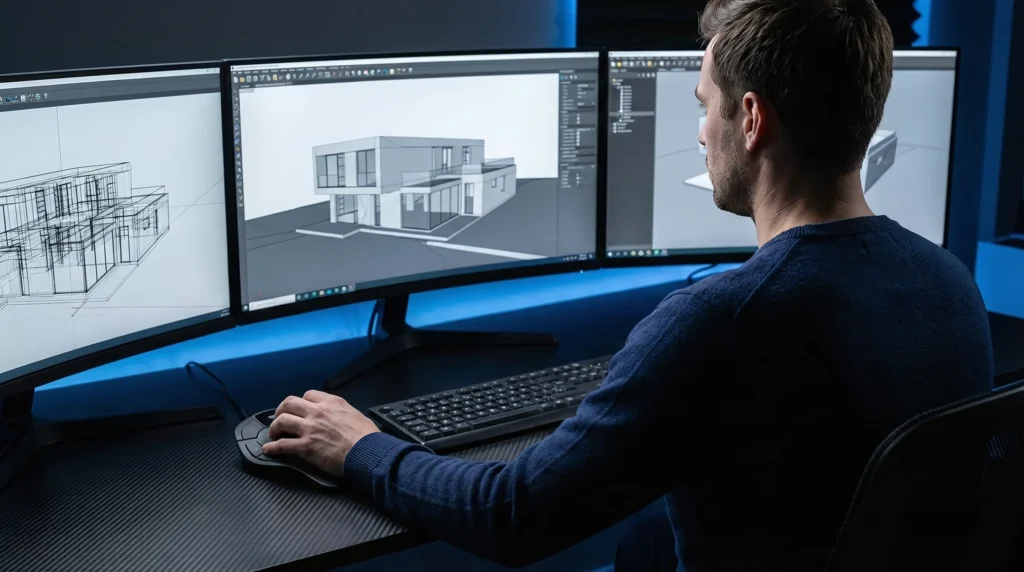
By outsourcing builders for your back-office and technical needs, you gain access to a 24-hour production cycle. While your local team is resting, your remote team can be finalizing CAD drawings, updating project schedules, or managing vendor communications. This continuous workflow drastically reduces project lead times and ensures that your onsite crews never arrive at a job site to find that the plans or materials are not ready.
Enhanced Technical Precision
When you tap into a global talent market, you can find specialists who have spent years mastering specific software like Revit, AutoCAD, or various BIM platforms. These professionals provide a level of technical precision that ensures fewer errors during the construction phase. High-quality documentation produced by an outsourced team reduces the risk of costly onsite revisions, which are one of the biggest threats to a home builder’s bottom line.
Streamlined Administrative Support
The burden of paperwork in 2026 is heavier than ever, with complex regulations and supply chain management requiring constant attention. Outsourcing the administrative side of your business allows your project managers to stay on-site, supervising quality and safety rather than being tethered to a desk. This shift in focus directly correlates to higher quality builds and more satisfied homeowners.
Maximizing Profitability Through Global Partnerships
One of the most compelling reasons to move toward a global workforce model is the immediate impact on your financial health. According to data from the National Association of Home Builders, labor costs and availability remain a top concern for the industry. You can view their latest industry reports to see how these trends are shaping the market.
When you reduce the fixed costs associated with local staffing, your break-even point for every project drops significantly. This lower overhead allows you to be more competitive with your pricing while maintaining, or even increasing, your profit margins. It also provides a financial cushion that allows for reinvestment into better marketing, higher-quality materials, or land acquisition.
Reduced Payroll Taxes and Benefits: Outsourcing eliminates many of the secondary costs associated with full-time local employment.
Lower Infrastructure Costs: You no longer need to provide desks, computers, or office space for every support role in your company.
Access to Specialized Skills on Demand: You can pay for the expertise you need exactly when you need it, rather than keeping an expensive specialist on a permanent salary.
Improved Cash Flow Management: Outsourcing agreements often provide more predictable monthly costs, making it easier to forecast your budget.
High-Value Roles to Delegate to a Remote Team
To effectively scale your home building business, you must identify which roles are best suited for a remote environment. Many owners find that once they begin outsourcing builders for technical tasks, they quickly see other areas where remote support can add value. The goal is to create a seamless integration between your local field operations and your remote office support.
Architectural Drafting and CAD Design
This is often the first area where builders see the benefits of a global team. Drafting is a time-consuming process that requires high levels of concentration and technical skill. By delegating this to a remote expert, you ensure that your plans are professional, accurate, and ready for permitting without the high cost of a local architectural firm for every minor change.
Estimating and Takeoffs
Accuracy in estimating is the difference between a profitable project and a financial disaster. Remote estimators can meticulously analyze blueprints to provide detailed material takeoffs and cost estimations. This allows you to submit more bids in less time, increasing your chances of securing high-value contracts without overloading your local staff.
Digital Marketing and Lead Generation
In 2026, a home builder’s online presence is their digital storefront. A remote marketing team can manage your social media, update your website gallery with your latest builds, and run targeted ad campaigns to ensure a steady stream of qualified leads. This keeps your pipeline full while you focus on the physical aspects of the business.
Project Scheduling and Coordination
– Tracking material deliveries and vendor timelines.
– Updating project management software to keep stakeholders informed.
– Managing communication between subcontractors and the main office.
– Ensuring all permits and inspections are documented and filed correctly.
Overcoming the Challenges of a Distributed Workforce
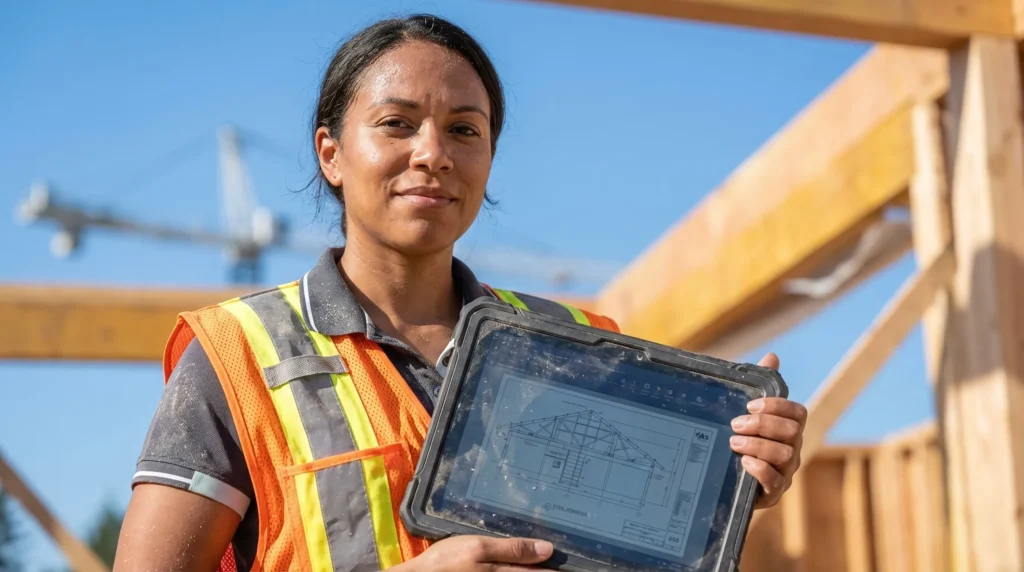
While the benefits of shifting away from local-only hiring are clear, it is important to address the practicalities of managing a distributed team. Success in this model requires clear communication protocols and the right technological stack. Many builders fear that they will lose control over the quality of work if the person isn’t in the same room, but modern tools have largely neutralized this concern.
The key is to treat your remote team as an integral part of your company culture rather than just a third-party service. Regular video calls, shared project management dashboards, and clear standard operating procedures (SOPs) ensure that everyone is aligned with your vision and quality standards. When everyone is looking at the same real-time data, the geographical distance becomes irrelevant.
Effective Communication Tools for 2026
– Video conferencing for weekly syncs and project briefings.
– Real-time messaging apps for quick queries and updates.
– Cloud-based BIM and CAD platforms for collaborative design.
– Integrated project management software to track every milestone.
Future-Proofing Your Business for Sustainable Growth
As we look toward the end of the decade, the home building business will continue to become more data-driven and technically complex. Companies that cling to outdated hiring models will find it increasingly difficult to compete with leaner, more agile firms that have mastered the art of the global team. Scaling your business in 2026 requires a mindset shift that prioritizes efficiency and expertise over physical proximity.
By diversifying your workforce, you are building a more resilient company. If the local labor market tightens even further, your business remains insulated because your core support functions are distributed globally. This stability allows you to plan for the long term with confidence, knowing that you have the infrastructure in place to handle any project that comes your way.
The transition from hiring local to scaling globally is not a change that happens overnight, but it is a journey that pays dividends almost immediately. Start by identifying one or two bottlenecks in your current process—perhaps your drafting is slow or your project managers are bogged down in admin. By outsourcing builders to handle these specific pain points, you will see a rapid improvement in your team’s overall productivity.
Summary of Scaling Strategies
Scaling a home building business in 2026 requires a departure from the traditional local hiring model in favor of a more flexible, global approach. By focusing your local resources on onsite execution and quality control, while delegating technical and administrative tasks to a remote team, you can significantly reduce overhead and increase project capacity. The strategic use of global talent provides access to specialized skills, 24-hour production cycles, and improved financial stability.
The move toward a distributed workforce is supported by advanced communication tools and project management software that ensure high levels of collaboration and quality. As the industry continues to evolve, those who embrace these modern operational strategies will be the ones who lead the market. Transitioning to this model is the most effective way to future-proof your business and achieve sustainable, long-term growth.
Ready to elevate your projects with expert architectural outsourcing? Let WorldTeams be your trusted partner for efficiency, accuracy, and growth.