How to Triple Your Firm Output with Global Architects in 2026

The Changing Landscape of Architectural Production
The architectural industry is standing on the precipice of a radical transformation as we move closer to 2026. For many firms, the ability to scale while maintaining high design standards depends heavily on how they integrate remote architects into their core operations. The traditional model of housing every draftsperson and designer under one roof is rapidly becoming a bottleneck for firms aiming for significant growth. By leveraging a global talent pool, firms can bypass local hiring shortages and tap into a diverse range of expertise that was previously out of reach.
In the current economic climate, efficiency is no longer just a goal; it is a requirement for survival and expansion. The transition to a more flexible workforce allows firms to remain agile, responding to project demands without the heavy burden of permanent overhead. As we look toward the middle of this decade, the most successful firms will be those that view their office walls as digital rather than physical. This shift represents more than just a change in location; it is a fundamental reimagining of how architectural work is produced, reviewed, and delivered to clients across the globe.
Why Remote Architects are the Key to Scaling in 2026
The demand for high-quality architectural services is projected to rise as urban development and sustainable retrofitting become global priorities. However, the supply of local talent often fails to keep pace with this demand, leading to burnout and missed deadlines. Integrating remote architects into your workflow provides an immediate solution to this capacity gap. These professionals bring specialized skills in various software suites and international building standards, ensuring that your firm remains competitive on a global stage.
Beyond just filling seats, a remote workforce allows for a level of scalability that physical offices cannot match. When a major project is greenlit, a firm can quickly expand its production team by onboarding specialized remote talent. Conversely, when projects wind down, the firm can scale back without the painful process of local layoffs. This elasticity is what allows a firm to triple its output; it ensures that the “engine” of the firm is always the right size for the fuel it is consuming.
Access to Specialized Technical Skills
Many architectural projects in 2026 will require niche expertise in areas like parametric design, environmental modeling, or advanced Building Information Modeling (BIM). Sourcing these specific skills locally can be time-consuming and expensive. By expanding your search to include remote architects, you can find experts who specialize in exactly what your project needs, whether that is high-end 3D visualization or complex structural detailing.
Reducing Operational Overhead
The cost of maintaining a large physical office is one of the biggest drains on a firm’s profitability. Rent, utilities, hardware, and local benefits packages add up quickly. By utilizing a remote model, firms can redirect those funds toward better software, marketing, or business development. This financial shift is a primary driver for firms looking to triple their output, as it allows for reinvestment into the areas that actually generate revenue.
Optimizing the 24-Hour Design Cycle
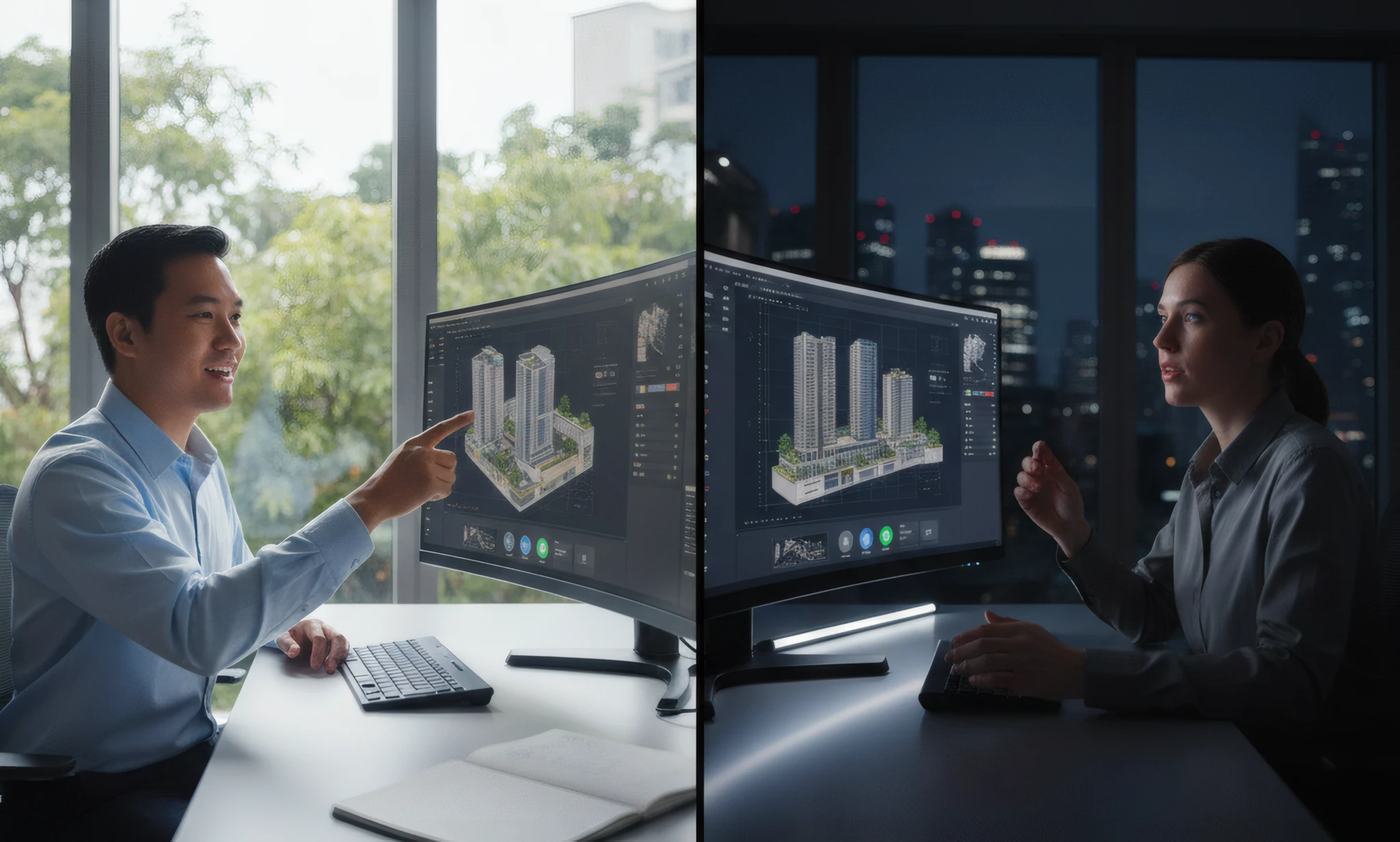
One of the most significant advantages of a global team is the ability to operate on a 24-hour production cycle. When your local team finishes their day, your remote team in a different time zone can pick up exactly where they left off. This “follow the sun” model drastically reduces the turnaround time for construction documents and renderings. A task that might take a local team three days to complete can often be finished in 24 hours when work is passed between time zones.
To make this work, firms must implement robust hand-off procedures and clear communication channels. Using centralized project management tools ensures that every team member knows the status of a project at any given moment. This continuous workflow does not just speed up individual tasks; it compounds across the entire life of a project, allowing the firm to take on three times as many projects with the same local headcount.
Effective Asynchronous Communication
Success with a distributed team relies on mastering asynchronous communication. Instead of relying on immediate verbal instructions, teams must document processes and expectations clearly. This leads to a more disciplined office environment where instructions are precise and easily referenced. Over time, this documentation becomes a valuable asset for the firm, creating a library of standards that ensures consistency regardless of who is performing the work.
Centralized Data Environments
In 2026, the use of cloud-based BIM platforms like Autodesk Construction Cloud or Graphisoft BIMcloud is non-negotiable. These tools allow remote architects to collaborate in real-time on the same model as your local team. By having a “single source of truth” for project data, you eliminate the risks associated with version control and ensure that everyone is working from the most recent design iterations.
while hiring the best talent in 2026
Maintaining Quality and Brand Standards Globally
A common concern when hiring remote talent is the potential for a dip in quality or a disconnect from the firm’s unique design language. However, with the right systems in place, remote architects can produce work that is indistinguishable from that of an in-house employee. The key lies in creating comprehensive CAD and BIM standards that are shared with every new team member. When everyone is following the same “playbook,” the output remains consistent.
Quality assurance should be integrated into every step of the remote workflow. Regular video check-ins and screen-sharing sessions allow for the same level of mentorship and critique found in a traditional studio. In fact, many firms find that the intentionality required to manage a remote team actually leads to higher quality work, as it forces principals to be more explicit about their design intent and technical requirements.
Standardizing Onboarding Procedures
To triple your output, you need a repeatable process for bringing new talent into the fold. This includes a structured onboarding phase where remote architects are introduced to the firm’s history, specific software templates, and communication protocols. A well-documented onboarding process ensures that new hires become productive members of the team within days rather than weeks.
Implementing Peer Reviews
Peer reviews are a powerful tool for maintaining standards across a distributed team. By having team members review each other’s work, you create a culture of accountability and continuous improvement. This also helps in cross-training your remote architects, as they become familiar with different aspects of the firm’s projects and various ways of solving design challenges.
Leveraging Global Talent for Administrative and Marketing Support
While the focus is often on design and drafting, tripling a firm’s output also requires scaling the “back office.” Remote architects often possess the technical knowledge to assist in more than just drawing; they can help with project management, specifications writing, and even marketing. A remote professional who understands the architectural process can create much more effective marketing content or proposals than a generalist freelancer.
According to the American Institute of Architects (AIA), firms that invest in digital transformation and diversified staffing models are better positioned to weather economic shifts. You can learn more about industry trends and best practices at AIA website. By offloading administrative and technical tasks to a global team, firm principals are freed up to focus on high-level design, client relationships, and business strategy.
Automating the Proposal Process
Remote teams can assist in creating standardized templates for proposals and feasibility studies. This allows the firm to respond to Requests for Proposals (RFPs) much faster than their competitors. When the technical data and basic layouts are handled by remote support, the local leadership can spend their time tailoring the creative pitch to win the contract.
Content Creation and Visual Branding
High-quality renderings and walkthroughs are essential for winning clients in 2026. Remote architects specializing in visualization can produce stunning imagery that brings a project to life. By having a dedicated remote team for visualization, a firm can ensure that every project in their portfolio looks its absolute best without taxing the time of the lead designers.

Building a Culture of Inclusivity and Innovation
Tripling your output is not just about the number of drawings produced; it is about the quality of the ideas generated. A global team brings a wealth of different perspectives and cultural influences that can spark innovation. When you hire remote architects from different parts of the world, you are effectively conducting a global brainstorm for every project.
Creating an inclusive culture where remote employees feel like a valued part of the firm is essential for long-term retention. Use video conferencing for more than just business meetings; host virtual social hours or “lunch and learns” where team members can share their local architectural traditions. This sense of belonging motivates remote talent to go above and beyond, contributing to the firm’s overall growth and success.
Encouraging Knowledge Sharing
Technology moves fast, and different regions often adopt new tools at different rates. By fostering a culture of knowledge sharing, your firm can stay ahead of the curve. Your remote team might introduce you to a new rendering plugin or a more efficient way to manage Revit families that they learned in their local market. This cross-pollination of ideas is a hidden benefit of the global staffing model.
Setting Clear Growth Paths
Remote architects are more likely to stay with a firm if they see a clear path for professional development. Offer opportunities for them to take on more responsibility, such as lead drafting roles or project coordination. By investing in the careers of your remote staff, you build a loyal and highly skilled foundation for your firm’s future.
Strategic Implementation for Long-Term Success
To achieve a 300 percent increase in output, a firm must view the integration of remote architects as a long-term strategic move rather than a temporary fix. It requires an initial investment in technology and process development, but the return on investment is substantial. As the world becomes more interconnected, the firms that master the art of global collaboration will be the ones that define the architectural landscape of 2026 and beyond.
Start small by outsourcing a single phase of a project, such as schematic design sets or 3D modeling. Once the workflow is refined, gradually increase the scope of work handled by your remote team. This phased approach allows you to work out the kinks in your communication and management style before scaling to full capacity. Before long, your firm will be operating at a speed and scale that would have been impossible under the old office-bound model.
1. Evaluate your current bottlenecks and identify tasks that can be handled remotely.
2. Invest in cloud-based collaboration tools to ensure seamless data sharing.
3. Develop comprehensive standards for design, drafting, and communication.
4. Partner with an experienced outsourcing provider to find high-quality remote architects.
5. Foster a firm culture that values and integrates global talent.
By following these steps, you can transform your firm into a high-output powerhouse. The journey to tripling your production begins with a single step toward a more global, flexible, and technologically advanced workforce. The future of architecture is not just about the buildings we create, but about the global teams we build to create them.
Ready to elevate your projects with expert architectural outsourcing? Let WorldTeams be your trusted partner for efficiency, accuracy, and growth.