Why Every Architectural Firm Needs a Global Talent Strategy in 2026

The Evolving Landscape of Architectural Practice
The architectural industry is currently witnessing a transformation that rivals the introduction of CAD decades ago. As we approach 2026, the traditional boundaries of the design studio are fading, replaced by a more fluid and dynamic model of project delivery. Integrating a robust global talent strategy into your firm is no longer just a competitive advantage; it is a fundamental requirement for survival in a high-speed, digital-first economy. Firms that embrace this shift find themselves better equipped to handle fluctuating workloads while maintaining the high standards of design excellence their clients expect.
The shift toward decentralization has been fueled by the rapid advancement of collaborative software and a cultural change in how professional services are rendered. Clients are increasingly less concerned about where their drafting team is physically located and more focused on the precision, speed, and sustainability of the final product. By tapping into international markets, firms can bypass local labor shortages and access a diverse pool of professionals who bring unique perspectives to the drafting table. This evolution allows principals to focus on business development and high-level design while the heavy lifting of production is handled by specialized remote teams.
In 2026, the firms that dominate the market will be those that have successfully built bridges across borders. These organizations understand that talent is distributed globally, even if opportunity traditionally was not. By adopting a mindset that prioritizes skill and reliability over physical proximity, architectural leaders can build more resilient, profitable, and creative practices. The journey toward a borderless studio begins with understanding why this transition is necessary and how it can be implemented to enhance your firm’s unique DNA.
Unlocking the Strategic Benefits of Global Talent
The primary driver for seeking professionals outside of your immediate geographic area is the sheer depth of expertise available. When you implement a global talent strategy, you are essentially expanding your HR department to cover every time zone. This creates an environment where work never truly stops, allowing for a follow-the-sun model that can significantly shorten project timelines. A Revit model that is updated during the workday in one hemisphere can be reviewed and refined in another, ensuring that deadlines are met with ease.
Diversified Perspectives and Innovative Design
Architecture is inherently a cultural practice, and having a diverse team enhances the creative process. When you collaborate with professionals from different regions, you gain access to different building techniques, material uses, and aesthetic traditions. This diversity can lead to more innovative solutions for complex design problems, especially in areas like sustainable urban planning or adaptive reuse. A team with a global perspective is often better equipped to think outside the box, offering clients a level of creativity that a localized, homogenous team might miss.
Cost Efficiency and Resource Allocation
Operating an architectural firm is an expensive endeavor, with high overhead costs associated with office space, high-end hardware, and local benefits packages. By leveraging a global talent pool, firms can significantly reduce these operational expenses. This does not mean compromising on quality; rather, it means reallocating funds toward the firm’s growth and specialized software. Savings realized through remote hiring can be reinvested into training, marketing, or research and development, providing the firm with the capital needed to compete for larger, more prestigious contracts.
while hiring the best talent in 2026
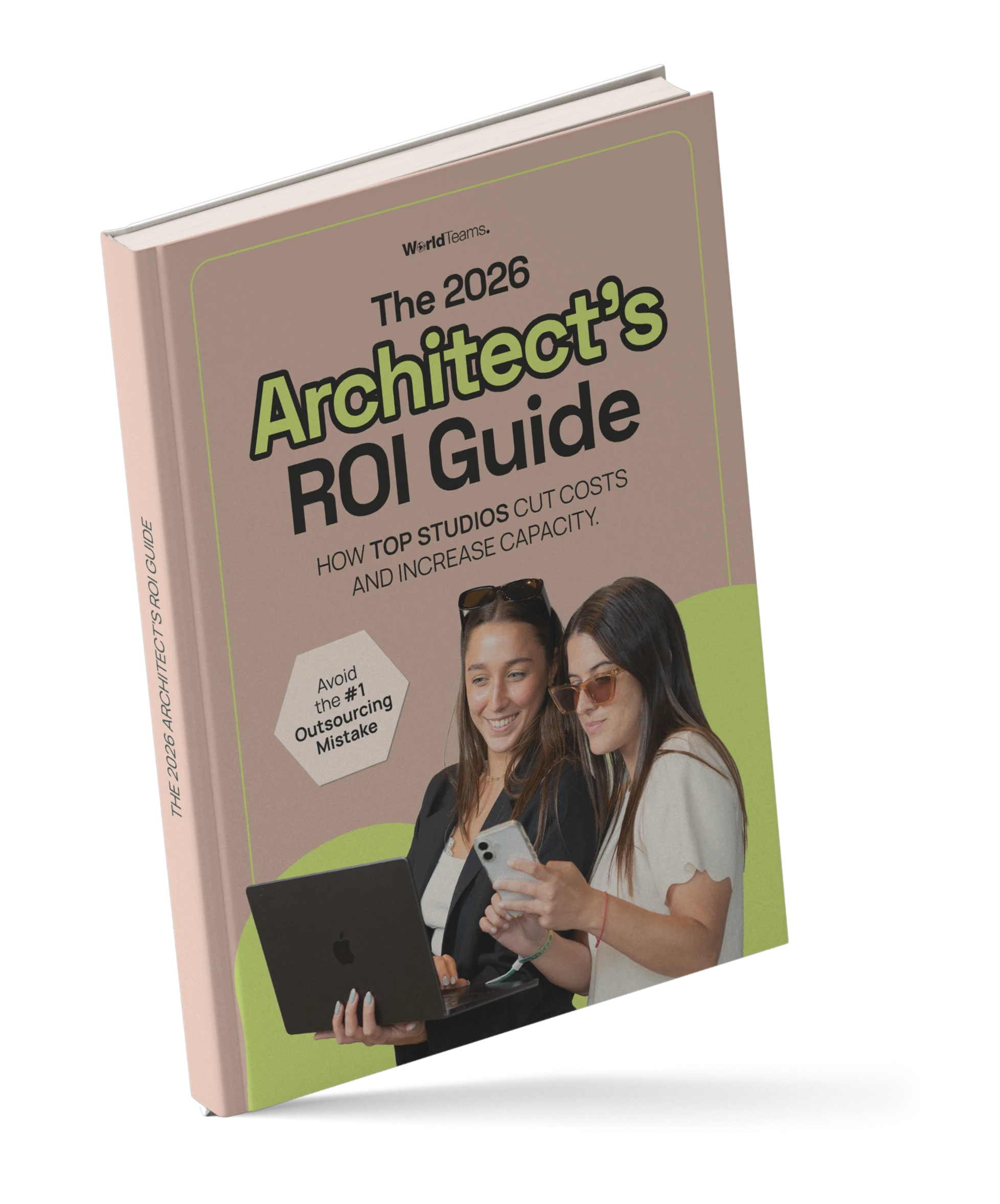
Addressing the Specialized Skills Gap in 2026
The demand for specialized architectural skills, particularly in Building Information Modeling (BIM) and environmental simulation, continues to outpace the supply of local graduates. Many firms find themselves in a constant battle for the same small pool of local BIM managers and technical drafters, leading to inflated salaries and high turnover rates. A global talent strategy provides a direct solution to this scarcity by connecting firms with highly trained experts in regions where these technical skills are abundant and highly valued.
According to research from the American Institute of Architects (AIA), the integration of advanced digital tools is the top priority for firms looking to improve efficiency. However, without the right people to operate these tools, the technology remains underutilized. By looking beyond local borders, you can find Revit specialists, 3D visualizers, and LEED-certified professionals who are ready to integrate immediately into your workflow. This ensures that your firm remains at the cutting edge of technology without the lengthy and expensive process of local recruitment and onboarding.
Access to Niche Expertise
Not every project requires a full-time specialist in acoustic modeling or parametric design. However, when those needs arise, a global strategy allows you to bring on experts on a project-by-project basis. This flexibility is vital for mid-sized firms that want to take on complex projects without the risk of hiring permanent staff for a niche role. Having a network of global professionals means you can scale your technical capabilities up or down based on the specific requirements of your current portfolio.
Reducing Recruitment Lead Times
In the traditional hiring model, finding a qualified senior architect or drafter can take months. In 2026, the pace of the industry does not allow for such delays. Remote hiring platforms and specialized outsourcing partners have streamlined the vetting process, allowing firms to fill critical roles in a fraction of the time. This agility ensures that you can respond to new project opportunities quickly, knowing that you have the infrastructure in place to support a sudden increase in workload.

Technological Foundations for a Global Workforce
For a global talent strategy to succeed, the underlying technology must be seamless and secure. The rise of cloud-based collaboration tools has made it possible for an architect in New York to work on the same central BIM model as a drafter in Buenos Aires in real-time. This level of synchronization was unthinkable a decade ago, but today it is the standard for high-performing firms. Investing in the right tech stack is the first step toward building a cohesive, unified team that functions regardless of physical location.
Cloud-Based BIM and Project Management
Platforms like Autodesk Construction Cloud and BIM 360 have revolutionized how architectural data is shared. These tools allow for centralized model management, ensuring that everyone is working from the most recent version of a file. When combined with project management software like Asana, Monday.com, or Trello, communication becomes transparent and trackable. This transparency is crucial for managing remote teams, as it allows principals to monitor progress and provide feedback without the need for constant meetings.
Communication and Culture Building
Maintaining a strong company culture is often cited as a challenge for remote teams, but it is entirely achievable with the right approach. High-quality video conferencing and instant messaging tools like Slack or Microsoft Teams facilitate the casual interactions that build rapport. To truly integrate global talent, firms should treat remote workers as core members of the team, involving them in design charrettes and firm-wide updates. This inclusive approach fosters loyalty and ensures that every team member, regardless of their location, is aligned with the firm’s vision and standards.
Financial Resilience and Competitive Bidding
In 2026, the economic landscape for architecture remains competitive, with clients demanding more value for their investment. Firms that rely solely on local talent often struggle to remain price-competitive while maintaining healthy profit margins. A global talent strategy allows for a more flexible pricing structure. By balancing the core design team with a highly efficient offshore production team, firms can offer more competitive bids without sacrificing the quality of the work or the well-being of their local staff.
This financial resilience is particularly important during economic downturns. A firm with a flexible, global workforce can scale back production costs more easily than one tied to a large physical office and a massive permanent payroll. Conversely, when the market booms, the firm can rapidly expand its capacity to take on more work. This elasticity is a key component of long-term business sustainability in the modern era.
– Reduced overhead costs for physical office space.
– Lower recruitment and onboarding expenses.
– Ability to offer 24/7 project cycles to clients.
– Higher profit margins on technical drafting and documentation tasks.
– Improved ability to scale for large-scale international projects.
Overcoming Challenges and Ensuring Quality Control
While the benefits of a global approach are clear, it does require a deliberate strategy to overcome common hurdles such as language barriers, time zone differences, and quality consistency. Successful firms address these issues by establishing clear standard operating procedures (SOPs) and utilizing specialized outsourcing partners who handle the heavy lifting of talent vetting and cultural alignment.
Standardizing Drafting Protocols
To ensure that drawings produced across the globe meet your firm’s specific standards, you must have a comprehensive set of drafting protocols. This includes clear guidelines on line weights, layering systems, and annotation styles. When these standards are documented and shared, the location of the drafter becomes irrelevant. Quality control should be baked into the process, with regular check-ins and a robust review system to catch any discrepancies before they reach the client’s desk.
Managing Time Zone Synchronicity
Instead of viewing time zones as a barrier, savvy firms view them as an opportunity. A four-hour time difference can be used to create a relay system. For example, a project manager can leave feedback at the end of their day, and the remote team can implement those changes while the manager sleeps. By the next morning, the updated files are ready for review. This “overnight” progress can drastically reduce the duration of the construction documentation phase, which is often the most time-consuming part of a project.
Security and Intellectual Property
Protecting your firm’s intellectual property is paramount. When working with global talent, it is essential to use secure VPNs, encrypted communication channels, and strict data access policies. Many firms choose to work with established outsourcing partners who have already implemented these security measures, providing an extra layer of protection for sensitive project data. Clear contractual agreements regarding confidentiality and ownership of work are also necessary to protect the firm’s interests.

Future-Proofing Your Firm for the Decade Ahead
As we look toward the end of the 2020s, the trend of globalized labor will only accelerate. The most successful architectural firms will be those that view themselves as hubs of design intelligence, capable of drawing on expertise from every corner of the world. By implementing a global talent strategy today, you are not just solving a temporary hiring problem; you are building a scalable, resilient business model that can adapt to whatever the future holds.
The firms that resist this change risk becoming stagnant, limited by local talent availability and high operating costs. In contrast, firms that embrace a global workforce can take on more ambitious projects, explore new markets, and deliver exceptional value to their clients. The technology is ready, the talent is available, and the market demand is clear. The only remaining question is how quickly your firm will adapt to this new reality.
The transition to a global model requires a shift in mindset from “managing people” to “managing outcomes.” When you focus on the quality of the deliverables and the efficiency of the workflow, the physical location of your team becomes a secondary concern. This focus on results is what defines the modern, successful architectural practice. By leveraging the skills of professionals worldwide, you can ensure that your firm remains at the forefront of the industry for years to come.
Embracing a global talent strategy is a journey that pays dividends in every aspect of your practice. From increased profitability and faster project delivery to enhanced creativity and a more diverse work culture, the advantages are undeniable. As the industry continues to evolve, the ability to collaborate across borders will be the hallmark of the most influential and successful architectural firms in the world.
Ready to elevate your projects with expert architectural outsourcing? Let WorldTeams be your trusted partner for efficiency, accuracy, and growth.