When One Great Engineer Isnt Enough for 200 Homes
Share this article


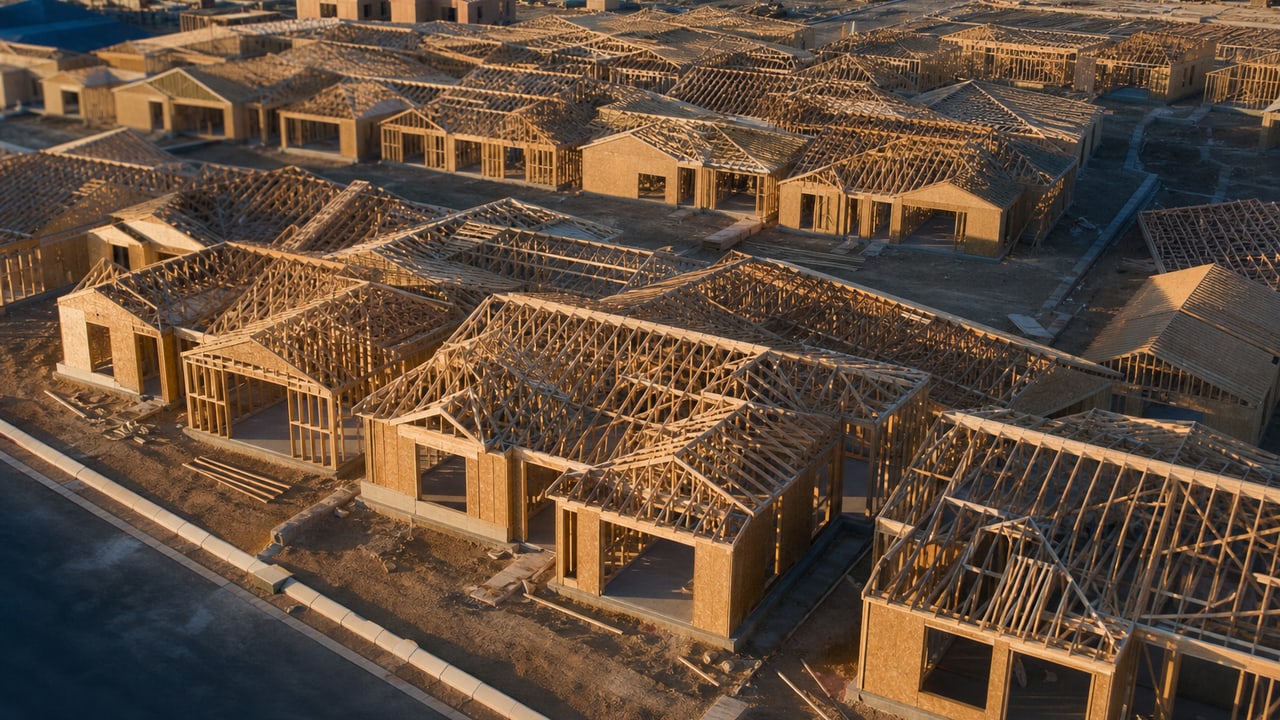
6 criteria homebuilders should check before hiring nearshore engineers for repeatable home plans, code-aware production at scale, QA, and consistent turnaround.
From One-Off to At-Scale: Hiring Nearshore Engineers for Repeatable Home Plans
For production homebuilders, the right nearshore engineers are the ones who can deliver code-aware structural work at scale, judged on six criteria: consistency across repeated plan types, state-by-state code coverage, batch quality assurance, predictable turnaround, capacity to flex with your build volume, and a clear U.S. PE stamping path. Hiring one great engineer solves a project. Building hundreds of homes a year is a production problem, and it needs different questions.
Here are the six that separate a project-scale hire from a production-scale partner.
Why Production Homebuilding Breaks the Usual Hiring Advice
Most engineering-hire advice assumes a bespoke project: one building, one unique design, one engineer's careful attention. Production homebuilding is the opposite, the same plan types repeated across dozens or hundreds of lots, with variations for site, region, and options.
At that volume, brilliance on a single set matters less than consistency across all of them. The U.S. started roughly 1.36 million housing units in 2025, with single-family the largest homebuilding segment (U.S. Census Bureau), and even in a softer year, a production builder is running the same plans through engineering again and again. Meanwhile the talent is scarce: the country needs about 25,000 new civil engineers a year, with civil engineering employment growing 6% through 2035 (BLS). We built this list from what actually breaks at scale, drift between plan versions, uneven turnaround, a QA process that worked for one set but not fifty. Check these six before you commit.
1. Consistency Across Repeated Plan Types, The Criterion That Defines Scale
The most important thing to verify is that the same plan comes out the same way every time. At production volume, an engineer who solves each sheet freshly introduces drift; you want standardized details applied uniformly across every instance of a plan type.
Why it's first: inconsistency between "identical" homes is what triggers field confusion, inspector questions, and callbacks. Uniformity is the whole point of production building.
Best for: builders running a catalog of repeated plans across many lots.
The tell: ask how they'd keep a shear-wall detail identical across 50 versions of the same plan, process, not heroics, is the right answer.
2. State-by-State Code Coverage
Production builders often work across multiple jurisdictions, and residential code changes at the state and local level. The right nearshore engineers know that a plan built for Texas needs rework for Florida's wind provisions or California's seismic requirements.
Why it matters: a repeated plan is only efficient if it's correctly adapted per market. An engineer who treats code as one-size-fits-all creates permit risk at every new location.
Best for: multi-state and multi-market builders.
Check it directly: ask how they'd adapt one base plan across two states with different wind or seismic demands.
3. Batch Quality Assurance
QA that works for one set collapses at volume unless it's built for batches. Look for a defined review process that catches errors across many similar sheets, not a one-off check that assumes each project is unique.
Why it matters: at scale, a single systematic error repeats across every home that used the flawed detail. Batch QA catches the pattern before it multiplies.
Best for: high-volume pipelines where one mistake propagates fast.
The tell: ask what their checklist looks like when reviewing 30 sets of the same plan versus one custom design.
4. Predictable, Repeatable Turnaround
Production schedules depend on rhythm. You need engineers who deliver on a consistent cadence you can plan around, not variable timelines that stall your permit pipeline.
Why it matters: a builder's schedule is a chain of dependencies. Unpredictable engineering turnaround backs up permitting, which backs up construction, which backs up closings.
Best for: builders with tight, sequenced production calendars.
Check it directly: ask for typical turnaround on a standard plan and how they hold it during busy periods.
5. Capacity to Flex With Build Volume
Homebuilding volume swings with seasons and markets. The right partner can add engineering capacity when you ramp and scale back when you slow, without you carrying idle payroll through a soft quarter.
Why it matters: production volume isn't flat, and fixed engineering headcount is either a bottleneck or a cost. Flex capacity matches engineering to starts.
Best for: builders whose starts vary meaningfully across the year.
The tell: ask how quickly they can add a second or third engineer to your account when volume spikes.
6. A Clear U.S. PE Stamping Path
Nearshore engineers produce and check the structural work; a U.S.-licensed Professional Engineer stamps it, because sealing authority is state-specific. At production scale this must be systematized, not improvised per project.
Why it matters: unclear stamping is a liability that compounds across hundreds of homes. Define who seals, in which states, before the volume starts.
Best for: every production builder, this is non-negotiable.
Check it directly: confirm the stamping arrangement and PE of record for each state you build in.
The 6 Criteria at a Glance
| # | Criterion | Why it matters at scale |
|---|---|---|
| 1 | Consistency across plan types | Prevents drift and field callbacks |
| 2 | State-by-state code coverage | Keeps repeated plans permit-ready per market |
| 3 | Batch quality assurance | Stops one error repeating across many homes |
| 4 | Predictable turnaround | Protects the production schedule chain |
| 5 | Capacity to flex | Matches engineering to build volume |
| 6 | U.S. PE stamping path | Manages liability across every home |
How We Ranked These
We ordered the six by what fails first and hurts most at volume. Consistency leads because drift between "identical" homes is the signature failure of production engineering; stamping is last only because it's a known must-do rather than a subtle one. Every criterion comes from where scale actually strains an engineering relationship, not from a generic hiring list.
On the talent side, WorldTeams places nearshore engineers screened from the top 3% of applicants, with about 85% having worked on U.S. projects, onboarded in as little as 72 hours, and we work with production builders including Toll Brothers, so the at-scale realities in this list are drawn from real pipelines, not theory.
The Difference Between a Hire and a Production Partner
One excellent engineer can carry a project. Two hundred homes a year needs a system, consistent details, code by market, batch QA, and turnaround you can build a schedule around.
Judge nearshore engineers on how they handle repetition and volume, not just how they handle a single set. That's the shift from hiring talent to building production capacity.
If you'd rather plug into a partner already running at that scale, that's exactly the gap we fill.
- homebuilders
- nearshore engineers
- production homes
Frequently asked questions
Where can homebuilders hire nearshore engineers for repeatable residential plans?
Through AEC-specialized nearshore partners that place Latin American engineers with U.S. residential experience and production-scale processes, not generalist marketplaces built for one-off gigs. The differentiator for builders is consistency and capacity: engineers who apply standardized details uniformly and can flex with your starts, paired with a clear U.S. PE stamping path.
How is hiring for production different from hiring for one project?
A single project rewards bespoke problem-solving; production rewards repeatable consistency. For volume work you're evaluating process, standardized details, batch QA, predictable turnaround, more than one-off brilliance. An engineer who's great on a custom home may still introduce drift across 200 near-identical plans without a production discipline behind them.
Can nearshore engineers handle multi-state code differences?
Yes, when they're vetted for it. Residential code varies by state and locality, so the right engineers adapt a base plan for each market's wind, seismic, and load requirements rather than reusing it blindly. Confirm this with a direct question about adapting one plan across two different jurisdictions.
Who is responsible for stamping at production volume?
A U.S.-licensed Professional Engineer, in each state where you build, sealing authority is state-specific and a foreign license never applies. The nearshore engineers produce and check the work; your PE of record reviews and stamps. At scale, systematize this per state before production begins.