The Structural Bottleneck Behind Late Residential Permits
Share this article


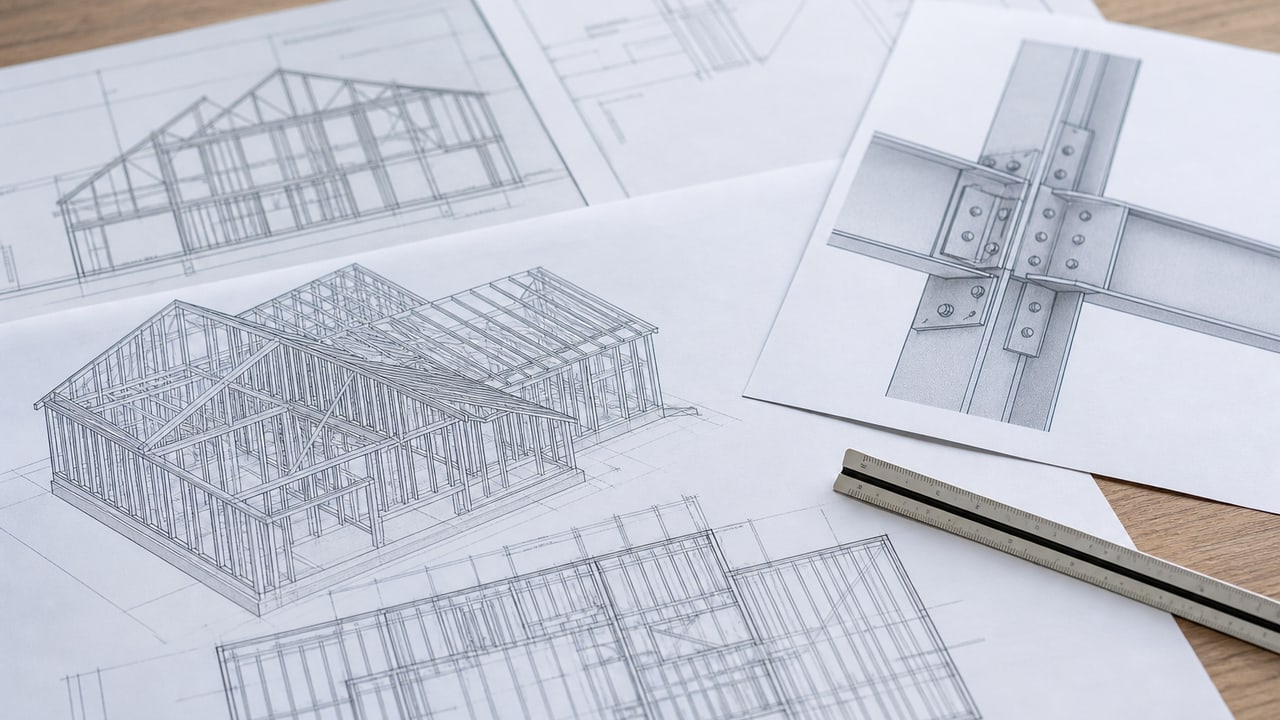
Residential permits stall at structural more often than at design. How to evaluate, hire and manage a nearshore structural engineer for permit-ready work.
Where to Hire Nearshore Structural Engineers for US Homes
To hire a nearshore structural engineer for US residential projects, work with a provider whose engineers know US residential codes (IRC and IBC), confirm the engagement runs under your licensed Engineer of Record, and check for real time-zone overlap so calcs and revisions turn around same-day. The right hire produces permit-ready structural drawings; your EOR stamps them.
A nearshore structural engineer is a licensed or degreed structural engineer based in Latin America who works in your time zone and produces framing plans, foundation details, lateral analysis, and calculations for your projects. Permit-ready means the structural package is complete and coordinated enough to submit, calcs, details, and notes that a plan checker can approve, sealed by your Engineer of Record.
On residential work, single-family homes, ADUs, and light-frame multifamily, the schedule rarely stalls at design. It stalls at structural: the calcs that arrive late, the foundation detail that doesn’t match the architectural set, the lateral package the plan checker bounces. That’s the bottleneck this guide clears. See how a residential team did it in the ADU San Mateo project.
Get the Licensing Model Right Before You Hire
One rule governs everything below: a nearshore structural engineer does not stamp US permit drawings. A licensed US Engineer of Record (a PE) reviews, seals, and holds liability. The nearshore engineer produces the analysis and drawings under that EOR’s direction.
Decide these before sourcing:
- Who your Engineer of Record is, and how they’ll review and seal nearshore-produced work.
- Your residential code basis, IRC prescriptive, IBC engineered, and the local amendments and wind/seismic categories for your market.
- The deliverables you need, gravity framing, foundations, lateral analysis, connection details, calcs.
- Your software and template standards for structural sheets.
Step 1, Evaluate for Residential Code, Not Just Analysis
By the end of this step you’ll know whether an engineer can work in the US residential context, not just run software. Analysis skill is table stakes; residential code judgment is the differentiator.
Ask a market-specific question: how they’d approach lateral bracing for a two-story wood-frame home in a high-wind or seismic zone, and when they’d move from IRC prescriptive to a full engineered design. Listen for code reasoning, not just “I’d model it.”
Step 2, Ask for a Sealed Residential Package They Produced
Portfolios of renders don’t apply here. Ask for a redacted residential structural set the engineer produced: foundation plan, framing plans, lateral analysis, connection details, and the supporting calculations.
Check that calcs are legible and traceable, details match the plans, and the package reads as something a plan checker approves, not a model dump. If they can only show analysis screenshots, they’re an analyst, not a permit-set producer.
Step 3, Set the Engagement Under Your Engineer of Record
Structure the relationship so the nearshore engineer produces and your EOR reviews and seals. Define what the EOR checks, at what stage, and how sign-off is recorded. This isn’t a formality, it’s the liability boundary.
Embedded, long-term collaboration works better here than project-by-project handoffs: the engineer learns your details, your EOR’s review standards, and your jurisdictions over time. This is production capacity you scale, not a hire-and-discard transaction.
Step 4, Manage Coordination and Turnaround Like an In-House Hire
The structural set lives or dies on coordination with the architectural and MEP sheets. Establish a cadence: when the architect moves a wall or the drafting team revises a plan, the structural package updates in the same cycle, not a week later. Clearing the residential drafting bottleneck only helps if structural keeps pace.
Time zone is the enabler. Nearshore LATAM engineers overlap US business hours, so a morning revision request gets a same-day answer, the difference between one permit cycle and two. Confirm stated working hours against yours before you commit.
Offshore Engineering Firm vs. Nearshore Embedded Engineer
Both promise structural capacity. They behave differently on a residential permit schedule:
| Dimension | Offshore engineering firm | Nearshore embedded engineer |
|---|---|---|
| Code basis | Often generic / international | US residential (IRC/IBC) + local amendments |
| Time zone | Next-day round trips | Same-day overlap with US hours |
| Coordination | Handoff between teams | Embedded in your cadence |
| Continuity | Rotating staff per project | Same engineer learns your standards |
| Stamp / liability | Under your EOR | Under your EOR |
Where Residential Firms Get the Structural Hire Wrong
- Hiring analysis skill, not code judgment. Software fluency doesn’t mean IRC-versus-engineered judgment for your wind or seismic zone.
- Blurring the stamp. The nearshore engineer produces; your licensed EOR seals. Confusing the two creates real liability exposure.
- Buying by the project. Rotating engineers relearn your details every time. Continuity is where residential speed comes from.
- Ignoring coordination cadence. A structural set that updates a week behind the architectural set reopens the plan check.
What Makes a Nearshore Structural Hire Permit-Ready
- Evaluate for US residential code judgment (IRC vs. engineered), not just analysis software.
- Require a real sealed-quality package, not analysis screenshots.
- Run the engagement under your Engineer of Record, they produce, your PE seals.
- Favor embedded continuity over project-by-project handoffs.
- Coordinate structural in the same cycle as architectural, on same-day overlap.
Clearing the Structural Bottleneck
On residential work, the permit rarely waits on design. It waits on structural.
Source that capacity nearshore, code-fluent, in your time zone, under your EOR, and the bottleneck stops setting your schedule. That’s the structural support WorldTeams places into residential firms.
- structural engineer
- residential permits
- nearshore hiring
Frequently asked questions
Answers to the questions readers ask most about structural engineer.
Where can I hire a nearshore structural engineer for US residential projects?
Through nearshore staffing providers that specialize in AEC and place Latin American engineers with US project experience into embedded roles. Look for US residential code fluency, same-time-zone overlap, and an engagement model that runs under your Engineer of Record.
Can a nearshore structural engineer stamp US permit drawings?
No. Only a licensed US Engineer of Record (a PE) can seal structural permit drawings and hold the liability. The nearshore engineer produces the calculations and drawings under that EOR’s review and direction. Vet nearshore engineers for code fluency and production quality, not licensure.
What residential structural work can be done nearshore?
Gravity framing plans, foundation design and details, lateral (wind and seismic) analysis, connection details, and supporting calculations for single-family homes, ADUs, and light-frame multifamily, all produced for review and seal by your EOR.
How fast can a nearshore structural engineer start?
With pre-screened talent, onboarding can happen in about 72 hours. The gating factor is usually your side, templates, EOR review process, and jurisdiction briefs ready on day one.
Is nearshore structural engineering reliable for permit work?
It is when the model is right: US-code-fluent engineers, same-time-zone coordination, and a clear EOR seal. The reliability comes from continuity and process, not from any single hire, the same principle behind engineering support that scales with your firm.