How to Hire Latin American Architecture and BIM Talent for U.S. Firms
Share this article


Key takeaways
- Vet for documented US or Canadian project experience, not just software fluency.
- Confirm real working-hours overlap, not just a time-zone label.
- Share your standards package before day one, not after the first deliverable.
- Weigh fully-loaded value: the recruiting, overhead, and hardware you no longer carry, not just base pay.
- Keep legal sign-off with your US-licensed architect or engineer of record.
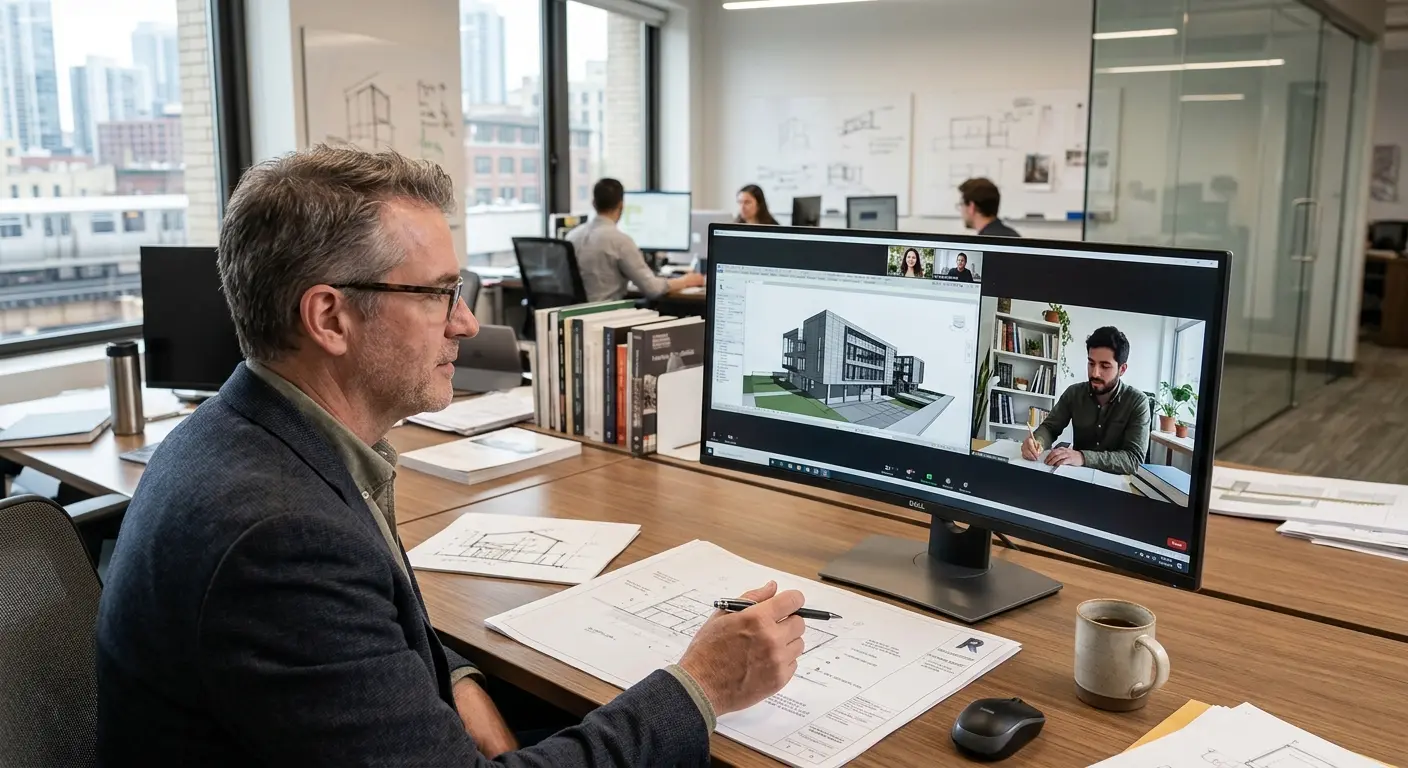
U.S. architecture firms hire Latin American talent by working with a nearshore staffing partner that vets for both software skill and US project experience, structures the engagement as a contractor working under the firm’s own licensed architect or engineer, and builds a short, standards-first onboarding period into the first two weeks.
Done this way, a Latin American architect, BIM specialist, or CAD professional integrates like an in-house hire, with far less recruiting friction and a standards-first onboarding path.
Why U.S. Firms Are Looking to Latin America Right Now
US architecture, engineering, and construction firms are short-staffed across almost every role, and the roles under the most pressure, drafters, BIM coordinators, and MEP support, happen to be some of the most nearshore-friendly work in the industry. The deliverable is a file or a model, the review process is digital, and quality is straightforward to check against a set of standards.
A full-time US hire is never just a salary. Payroll taxes, benefits, software seats, and firm overhead all stack on top before that seat becomes profitable, and firms rarely count the recruiting time it takes to fill the role in the first place. Nearshore hiring doesn’t just trim the base; it removes a large slice of that overhead and recruiting drag entirely, which is a big part of why so many US firms are now looking south.
What Roles Firms Typically Fill With Latin American Talent
- Architects and architectural designers for concept through construction documentation
- BIM specialists and coordinators for Revit modeling, clash detection, and multi-discipline coordination
- CAD drafters for floor plans, elevations, sections, and permit sets
- Structural, MEP, and civil engineering support working under a US-licensed engineer of record
- 3D visualization and rendering specialists
How to Evaluate a Latin American Architecture or BIM Candidate
Software Fluency Isn’t Enough on Its Own
Revit and AutoCAD proficiency is table stakes. What separates a strong hire from a weak one is documented experience on US or Canadian projects, since US code conventions, drawing standards, and client expectations differ meaningfully from other markets.
Check for Real-Time Overlap, Not Just a Time Zone Label
Countries like Argentina, Colombia, and Mexico sit within one to three hours of most US time zones, which means daily standups and live markups work the same way they would with an in-house hire. Confirm actual working-hours overlap before assuming “Latin America” automatically means real-time collaboration.
How Onboarding Actually Works
- Define the role and share your standards package, templates, layer conventions, and title blocks, before day one.
- Match with a candidate vetted for both the software stack and US project experience.
- Set up centralized file access through your existing BIM or CAD environment, the same access you’d give any remote employee.
- Run a short structured ramp period, typically the first one to two weeks, focused on your specific conventions and current projects.
- Establish the weekly sync and QA cadence from week one, not after the first mistake.
At WorldTeams specifically, that remote architecture staffing process is built to get a professional working inside 72 hours of signing, with 85% of placed professionals already carrying direct experience on US-based projects.
Common Mistakes Firms Make on Their First Nearshore Hire
- Skipping the standards handoff and assuming a strong Revit resume means the drafter will infer your firm’s conventions on their own.
- Hiring for software skill alone without confirming documented US or Canadian project experience, which is what actually shortens the ramp-up period.
- Treating the first hire as a one-off test instead of building the weekly sync and QA habits from day one, then blaming the model when informal management causes friction.
- Assuming every country in the region has identical time-zone overlap; Argentina, Colombia, and Mexico each sit differently relative to US time zones, so confirm specifically rather than assuming.
Start With One Role, Then Build the Team
Most firms don’t need to nearshore an entire department on day one. Start with the role causing the most backlog, usually drafting or BIM coordination, prove the workflow, then expand.
Pick the seat causing the most backlog and pilot it with a vetted nearshore professional before you scale. Tell us what you need, the rest it’s on us!
Frequently asked questions
Common questions about cost, visas, providers, and how fast a nearshore professional can start.
Is hiring a Latin American BIM specialist cheaper than hiring in-house?
For most US firms, yes, and meaningfully: often landing around half the fully-loaded cost of a comparable US hire, an approximate figure that varies by role and seniority. The value comes from what nearshore removes: much of the payroll tax, benefits, overhead, and hardware that get layered on top of a base salary, plus the recruiting time to fill the seat. The exact difference depends on role, seniority, and how the engagement is structured, so ask a provider for specifics on your roles.
Do I need to sponsor a visa to hire someone in Latin America?
No. Nearshore hires are engaged as contractors working remotely from their home country, not employees relocating to the US, which avoids the visa and relocation process entirely while keeping legal responsibility for sealed documents with your US-licensed architect or engineer of record.
Which outsourced architecture staffing services help U.S. firms hire Latin American talent?
Nearshore staffing providers that specialize in AEC roles and vet specifically for US project experience are the best fit, since generic staffing agencies without AEC depth often can’t validate whether a candidate actually understands US drawing standards and code conventions.
What architecture staffing providers specialize in Latin American remote professionals?
Look for providers built specifically around Latin American nearshore talent and AEC specialization, rather than general remote-staffing marketplaces, since AEC hiring requires vetting for software fluency, US project exposure, and time-zone overlap all at once. Our comparison of nearshore and offshore models walks through what separates them.
How fast can a Latin American hire start working on live projects?
With a dedicated nearshore provider, onboarding can happen in as little as 72 hours once standards and system access are shared. Freelance or ad hoc hires typically take longer because they restart the learning curve on your conventions with each new engagement.