The Remote BIM Hire Nobody Warns You About
Share this article


Key takeaways
- Software fluency is the entry ticket, not the reason to hire.
- The engagements that work share four traits: US experience, genuine overlap, true fluency, and a deliberate first-two-weeks handoff.
- Vet for those and “remote” stops being a risk and starts being leverage.
What Actually Decides Whether a Remote BIM Hire Works
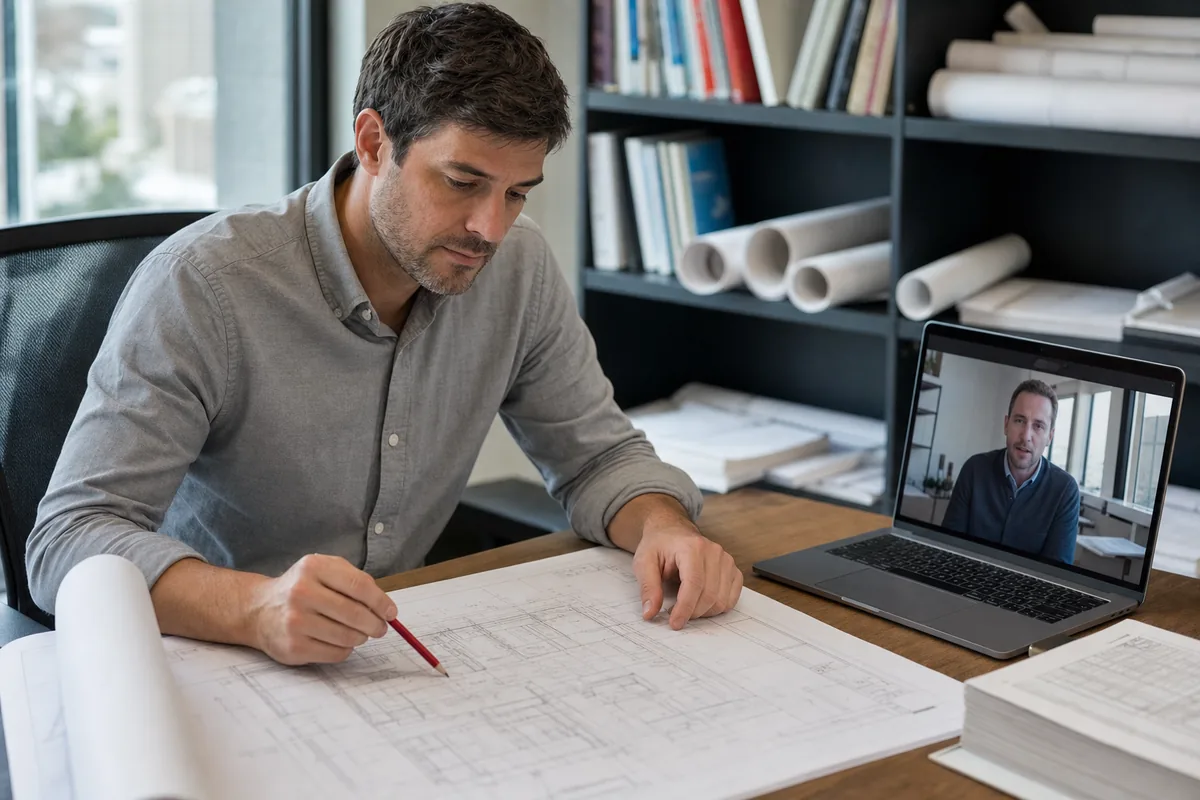
Here is the uncomfortable truth most hiring guides skip: knowing the software gets a candidate in the door and tells you almost nothing about whether they’ll work out. What decides the outcome is far less glamorous: real US project experience, genuine time-zone overlap, true bilingual fluency, and the standards handoff you run in the first two weeks. Get those four right and a remote Revit or ArchiCAD professional plugs into your team like an in-house hire. Get them wrong and you’ve bought a very tidy version of the wrong workflow.
Most content on this topic is written by the people selling the dream, so it quietly leaves out the parts that cost you a review cycle. This does the opposite. We place nearshore architectural talent with hundreds of US and Canadian firms, including production builders like Toll Brothers, so the points below come from what breaks in production, not from a brochure.
1. “Knows Revit” Is the Floor, Not the Differentiator
Every serious candidate can drive the software. That’s table stakes. The thing that separates a hire who saves you time from one who costs you a redraw is documented experience on US or Canadian projects, because sheet conventions, drawing standards, and client expectations here differ in ways a portfolio render will never reveal.
So skip the software checklist and ask to see a real construction document set the person produced: a code analysis sheet, dimension strings, real sheet notes. Most of the professionals we place have already worked on US projects, which turns “do you know our standards” into a conversation about specifics rather than a training program you’re funding.
2. “Latin America” Doesn’t Automatically Mean Real-Time
Nearshore is the reason remote BIM works for iterative design, but the region name alone guarantees nothing. Argentina, Colombia and Mexico sit close to US business hours, yet you still have to confirm the individual’s actual working overlap, not just the country on the résumé.
Picture the difference in production terms. A redline marked up mid-morning gets a question back twenty minutes later and a revised sheet by mid-afternoon: same day, same set, no handoff note. Now compare a workflow where each clarification waits for the other side of the planet to wake up, and a three-round coordination issue eats a week your same-zone team would have cleared before lunch. If you want the mechanics of that, our guide on finding the best remote architects walks through it.
3. Bilingual Fluency Is a Technical Requirement, Not a Nice-to-Have
Architecture runs on ambiguous verbal shorthand. “Pull that back to the face of stud.” “Match the corridor wall type.” None of that lives in a glossary. Someone who is genuinely fluent asks the clarifying question in the moment; someone who isn’t guesses, and you find the guess baked into the set two weeks later.
This is exactly why firms hunting for bilingual designers for US projects keep landing on nearshore Latin American talent: strong English alongside native Spanish or Portuguese, plus cultural norms close to US client expectations. Confirm fluency candidate by candidate, though. Assume nothing from the map.
4. “Code-Aware” Means Nothing Until You Name the Edition
“Knows US code” is not a credential. A genuinely code-aware drafter works to the specific code edition your jurisdiction has actually adopted, local amendments included, not the newest model code and not whatever they studied last. The International Code Council publishes on a rolling cycle, but adoption lags and varies state by state, and places like California, New York and Florida run their own amended versions.
The consequence is blunt. A permit set citing a section that doesn’t exist in the locally adopted edition gets kicked back at plan review. Look for talent that confirms the adopted edition before drawing and records it on the code analysis sheet.
5. The First Two Weeks Decide Everything
Most remote BIM problems trace back to week one, not month six. The setup you skip at the start becomes the rework you pay for later. Before any modeling begins, hand over your template file, title block, layer and view standards, sheet-naming convention, and one recently completed set as a reference. Grant tool access on day one, not week two.
The highest-leverage hour you’ll spend all month is reviewing the first bounded submission line by line and explaining the reasoning, not just the correction. That single review teaches your standards faster than any onboarding deck.
6. You’re Buying Continuity, Not a Task Queue
The value of remote BIM talent compounds only when it’s the same person week after week. A freelancer who finally learns your title-block conventions and then rotates off mid-project restarts the learning curve at the worst possible moment. Embedded, dedicated staff behave like a department; a rotating cast behaves like a ticketing system.
So the real question isn’t the hourly line item. It’s the bench: who covers when your modeler is out for two weeks? Bench depth is the quiet difference between a staffing partner and a matchmaking service.
What to Verify Versus What Should Worry You
Run any candidate or partner through this before you commit. Two or more red flags clustered together usually predict a rocky first project.
| Verify This | Green Flag | Red Flag |
|---|---|---|
| US project experience | A full CD set with a code analysis sheet | Only portfolio renders |
| Time-zone overlap | Confirmed working hours that match yours | “We’re flexible” with no specifics |
| Bilingual fluency | Comfortable on a live design call | Email-only, avoids voice |
| Continuity | Named backup and a real bench | One person, no coverage plan |
Skip the Guesswork on Your Next BIM Hire
You already know Revit isn’t the hard part: fit is. Tell us what your firm needs and we’ll match you with pre-vetted, US-experienced BIM talent who’s already in your time zone. If you want to go deeper on the criteria, see what a job-ready BIM architect actually looks like, and if trust is the sticking point, how firms de-risk outsourcing abroad.
Frequently asked questions
The three questions the WorldTeams team answered in the article itself, moved here so each answer lives once on the page.
Is remote BIM talent as reliable as an in-house hire?
Yes, when the four fundamentals are in place. A dedicated nearshore modeler with US experience, real overlap and a proper standards handoff produces work that’s indistinguishable from an in-house hire’s, because functionally, that’s what they are. Reliability drops fast with rotating freelancers and thin overlap, which is a sourcing problem, not a remote one.
Where can I find bilingual designers for US projects?
Nearshore Latin America is the practical answer for most US firms: the talent pool is deep in Revit and ArchiCAD, English fluency is common, and the time zones line up. Our walkthrough on hiring Latin American architecture and BIM talent covers how to source and vet it.
What should I check first when hiring remote BIM talent?
Start with a real construction document set and a short live conversation. The set tells you whether they know US standards; the call tells you whether the bilingual fluency is real. Everything else (software, tooling, availability) is easier to confirm and easier to fix.