

The Secret Weapon Top Home-Builders Are Using to Scale in 2025
Find out how top home-builders are leveraging outsourcing to unlock expertise, increase productivity, and grow in 2025.
Read article →Updated September 2026





 and +370 companies in the US & Canada
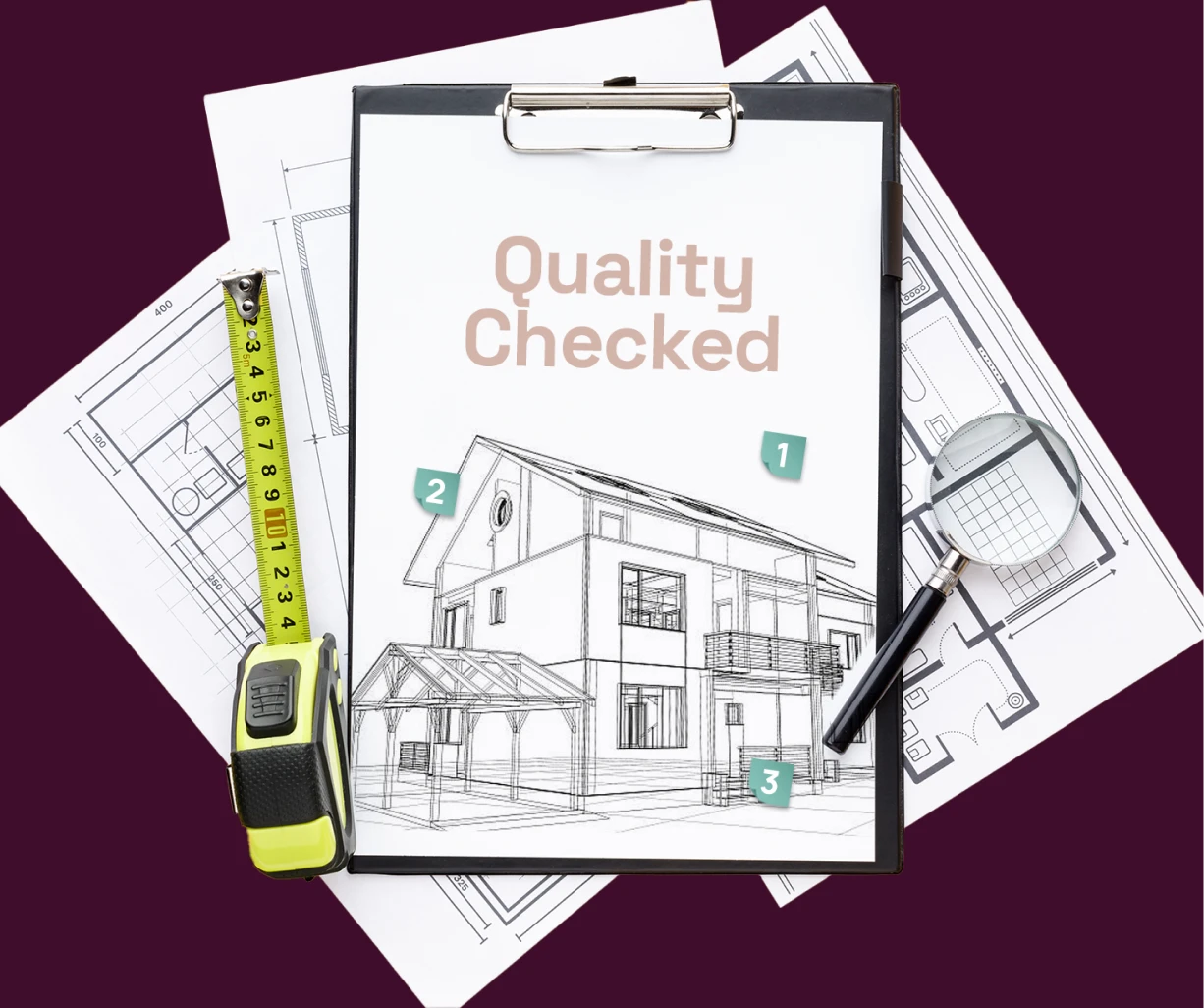
Successful homebuilding requires more than great drawings—it requires control, coordination, and accountability. That’s why WorldTeams offers outsourcing for homebuilders focused on project management and quality control. We act as your extended operations arm, combining trained managers, dedicated support, and multi-step review processes to deliver flawless results.
With architectural outsourcing for homebuilders, you gain visibility, precision, and real-time communication that keeps your projects moving forward—without the burden of managing multiple freelancers.
Your main point of contact for every deliverable. They ensure communication in outsourcing architecture is seamless and that every drafter aligns with your standards and project goals.
Daily production support that integrates with your internal team. These professionals handle markups, revisions, and updates—ideal for outsourcing construction design services when your workload spikes.
Our quality control specialists perform multi-level reviews of drawings before delivery. This is what makes WorldTeams known for quality architectural services outsourcing that’s consistent and reliable.
Fully coordinated, code-compliant documentation ready for local authority approvals. A core part of our engineering outsourcing for homebuilders, handled by experts familiar with U.S. permitting processes.
| Other Outsourcing Companies | WorldTeams |
|---|---|
| Random freelancers | Dedicated teams aligned to your workflow and standards |
| No quality control process | Quality is guaranteed: every delivery passes through Project Managers, QC Reviewers, and Drafter Managers before reaching you |
| Poor communication across time zones | Communication in outsourcing architecture handled by English-fluent managers in your same time zone |
| High turnover, inconsistent output | Zero turnover: the same drafters work with you daily for continuity |
| One-size-fits-all approach | Tailored architecture and design outsourcing solutions built for homebuilders |
| Errors found late, leading to rework | Three sets of eyes before delivery—issues are caught before they reach you |
| Price-driven, not quality-driven | Reliable architectural outsourcing partner that balances cost-effectiveness and precision |
Quality isn’t optional… it’s built into every project. Our layered review system ensures that with WorldTeams, quality architectural services outsourcing is not a promise, it’s a process.

Our architecture and design outsourcing solutions are built for predictability and trust. Each delivery passes through structured workflows and multiple checkpoints, ensuring consistency and accuracy.
Here’s why top builders choose us as their reliable architectural outsourcing partner:
Over 240 U.S. companies rely on our process.
Drafter Managers guarantee clear updates and fast responses.
Reduce payroll, avoid turnover, and keep teams steady year-round.
Quality control integrated into technical and permit documentation.

We believe quality is non-negotiable. Every drawing, revision, and permit set is reviewed by multiple specialists before reaching you. With our project management and quality control outsourcing for homebuilders, you’re not just delegating tasks—you’re gaining a partner who treats your projects as their own.
They own the deliverable, not the drawing. A Drafter Manager is the single point of contact on your account. They take the request, decide who does it, and hold the schedule. They run the review before anything reaches you, and they answer for what was sent. Drafters produce. The manager is what makes several drafters behave like one team instead of several inboxes. For a builder running many plans across divisions, that role is usually the difference between capacity that helps and capacity that generates coordination work. It also means questions have one address. You should not be the person figuring out which of five people is drawing a plan. If you are, the arrangement is not working. This is the operational layer that separates added capacity from added coordination work, and it is worth asking any partner to describe theirs.
Whether the set is internally consistent, complete against your checklist, and correct against the source. Consistency is the largest category. The plan agreeing with the elevations. The schedules matching what is drawn, and the dimensions adding up. And a change made on one sheet reflected on every sheet it touches. Completeness is checked against a standard list per deliverable type, so nothing depends on one person remembering. Correctness is the comparison against the redline, the base plan, or the request that started the work. Compliance review against code stays with your design professional of record. A review that catches nothing on a large set usually means the review did not happen, so ask any partner what their reviewers actually find. The answer tells you whether the review is a step or a signature.
Then the remote manager reports into yours rather than replacing them. That is the common arrangement, and the split is straightforward. Your PM owns priorities, decisions, and the relationship with your divisions. The remote manager owns execution: assignment, throughput, quality control, and the status of every item in the queue. What your PM stops doing is chasing individual drafters and checking drawings, which is the part of the job that scales badly. Where a builder has no internal PM for drafting, the remote manager can carry more of it. The decisions still come from your side, and that is not negotiable. The arrangement is worth agreeing explicitly at the start. Two managers with unclear boundaries is worse for a schedule than one manager who is overloaded. Write the split down in the first week.
By staffing named professionals to one client instead of pooling them. The person you interview and approve is the person who works on your plans, and they do not rotate between accounts week to week. That continuity is the point. After a few months they know your option codes, your standard details, and the three things your reviewer always sends back. We support that with a dedicated Account Manager and a coach working with the professional. Retention is something you build rather than something you promise. If somebody does leave, the replacement is briefed against your standards and your library rather than starting cold. And if the match is wrong, we replace the person. That is written into the engagement rather than implied, and it is the commitment worth checking in writing with anyone you evaluate.
A status list per deliverable, a queue with dates, and a record of what came back for revision. That last one is the useful measurement, and the one builders track least. Throughput tells you how much is moving. Rework tells you whether it is right. When a builder measures which deliverables come back and why, the pattern is usually concentrated. One plan type. One option. One recurring misunderstanding about a standard. That is fixable in a week once it is visible. Turnaround time by request type is the other number worth holding, because it is what your divisions actually feel. Reporting cadence is set to your operation rather than to ours. It follows the rhythm builders already run against industry benchmarks, such as those published by the National Association of Home Builders. A reporting pack that never shows rework is measuring the easy half.
That’s the WorldTeams standard for outsourcing for homebuilders that builds trust—and lasting results.

Find out how top home-builders are leveraging outsourcing to unlock expertise, increase productivity, and grow in 2025.
Read article →
Discover 2025's top trends for modern home builders and learn how architectural outsourcing can boost efficiency, quality, and growth.
Read article →
Most AutoCAD advice teaches a solo drafter to work faster. It never asks the question a principal actually needs answered: is this backlog a training gap or a staffing gap.
Read article →