Starting Your Own Architecture Firm? Rethink Your First Hire
Share this article


Key takeaways
- The day you go independent, every hour you spend drafting is an hour you are not spending on clients, fees, or the next project.
- A full time local hire is a fixed commitment; most new studios do not have steady enough volume yet to justify one.
- Production work like drafting, BIM modeling, and documentation can be delegated first, while design decisions and client relationships stay with you.
- A flexible production model lets you scale support up or down with your actual project load instead of guessing a headcount.
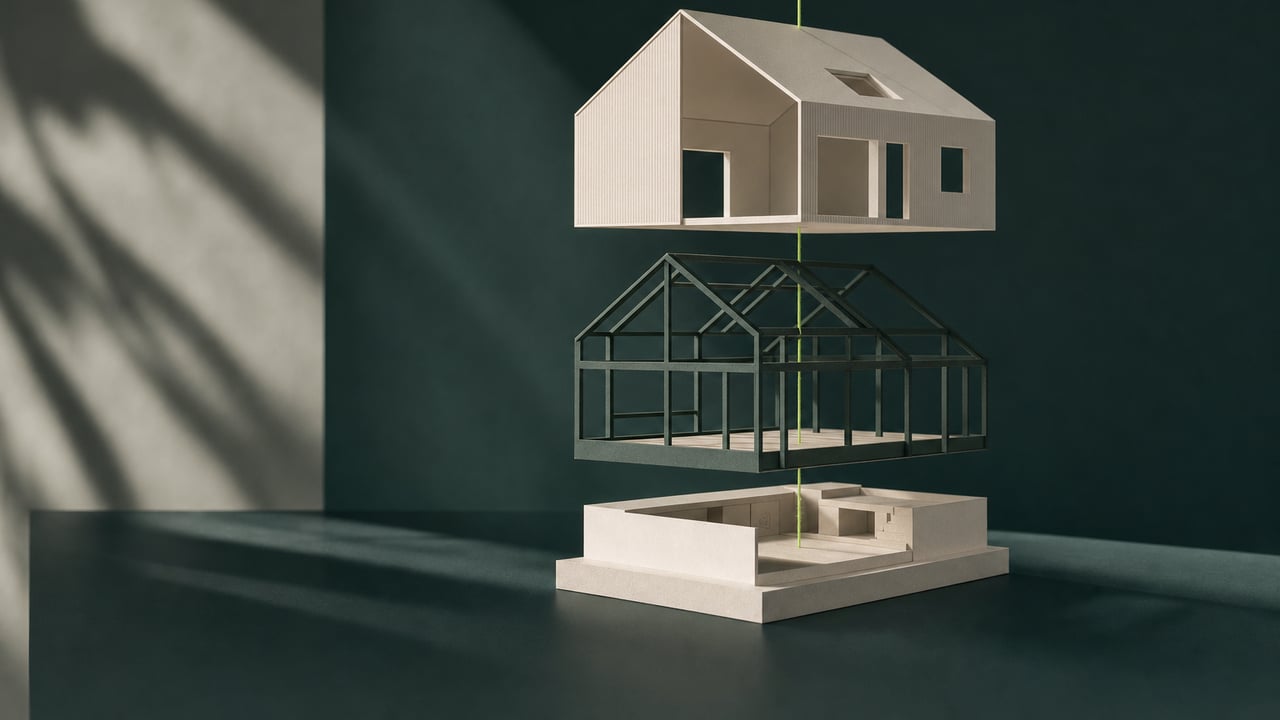
Before you commit to a full time local hire, see why flexible production support is often the smarter first move for a brand new architecture studio.
You just left the firm. Now what do you do with your time?
The first weeks of running your own architecture studio look nothing like the job you left. There is no production team down the hall. No one drafting the construction set while you take the client call. Every task, from the schematic sketch to the Revit model to the invoice, is yours.
That is the point of going independent. But it also creates a real production problem: you have more work to do than hours to do it in, and you do not yet have the volume to justify a full time hire.
Why a full time local hire is often the wrong first move
A full time hire is a fixed commitment. Salary, and the expectation of steady work to give them, start on day one, regardless of whether your project pipeline is steady yet.
Most new studios do not have that steady pipeline in year one. Projects come in waves. A hire made to cover a busy month can sit underused the next, while the fixed cost keeps running. That mismatch is one of the most common reasons a promising new practice runs into cash flow trouble early.
The alternative is not doing everything yourself indefinitely. It is finding production support that can flex with your actual workload instead of locking you into a headcount before you know what your workload will be.
What to delegate first, and what to keep
Not every task in a new studio carries the same weight. Some of it is where your judgment matters most. Some of it is simply volume.
Keep with yourself:
- Design decisions and concept direction
- Client relationships and project strategy
- Final review and sign off on deliverables
Delegate first:
- Revit and BIM documentation
- Construction drawing sets
- Repetitive drafting and detailing tasks
This split lets you spend your limited hours on the work that actually grows the practice, the design thinking and the client relationships, while production tasks move to someone else who can execute inside your file structure and standards.
How a flexible production model works for a small studio
A flexible production model means you bring in a dedicated professional to handle production work without adding a fixed, full time position. The professional works inside your existing software, your drawing standards, and your working hours, the same way an in house hire would, but the arrangement scales with your actual project load instead of staying fixed.
WorldTeams works with pre-vetted professionals from the top 3% of applicants, matched to your studio's needs, with onboarding in less than 72 hours once you are matched. There is no minimum number of hours required, which matters for a studio whose workload is not steady yet. As WorldTeams founder Camila Brugger puts it: "We don't ask you for any minimum of hours or anything."
This is not a staffing agency placing a generic drafter. It is a working relationship built around your actual pipeline, so the support grows when your projects grow and does not sit as dead weight when they slow down.
A studio that scaled without the fixed overhead
One boutique architecture studio working with WorldTeams ran its practice without spending anything on office space or equipment. The production support operated remotely, inside the studio's own workflow, letting the principal focus on design and client work instead of staffing logistics.
The same flexible model has also supported firms at much larger scale: a WorldTeams architecture partnership with Toll Brothers grew a remote drafting team from 4 people to 45, with more than 70 drafters currently active. The model that works for a one person studio's first production hire is the same one that scales as the studio grows.
More than 370 companies in the US currently work with WorldTeams for this kind of support.
What to check before bringing in outside production support
Before you bring in any outside help, a short checklist saves you from problems later. None of this requires a large setup, just a few things in place before day one:
- Your drawing standards and templates are written down, not just in your head.
- Your file sharing and cloud setup is ready so a professional can work inside it from day one.
- You have a clear review point where you check and sign off on the work before it goes to a client or consultant.
- You know roughly what the first month of work will involve, even if the months after are less certain.
- Licensure, stamping, and final quality control stay with you, the same way they would with any team member.
With these in place, bringing in production support is a controlled decision rather than a reaction to being overloaded.
Where this fits in your first year
If you are weighing your first move as a new principal, the decision is not outsourcing versus not outsourcing. It is full time local hire versus flexible production support that matches your actual volume. For a studio without steady project flow yet, flexible support is usually the lower risk way to free up your time for the work that builds the practice.
To see how this works for architecture studios specifically, visit the WorldTeams architecture outsourcing page. For a closer look at how outsourcing changes day to day production, read Architecture Outsourcing: Streamlining Your Project Workflow, or see how the model applies to a specific practice context in Home Renovation and Architecture Outsourcing: A Powerful Duo.
If you are ready to talk through what your studio's first year of production support could look like, reach out to WorldTeams to start the conversation.
- architecture outsourcing
- independent architects
- production support
Frequently asked questions
What should a newly independent architect outsource first?
Start with the production work that takes the most hours but the least of your unique judgment: Revit or BIM documentation, drawing sets, and repetitive drafting tasks. Keep design direction and client conversations with yourself. See what to delegate first, and what to keep for the full split.
Is a full time hire the right first move for a brand new studio?
Not usually. A full time local hire is a fixed cost that assumes steady, predictable volume. Most studios in their first year have project flow that varies month to month, so flexible production support fits better until volume stabilizes. See why a full time local hire is often the wrong first move for the reasoning, and general guidance for new practices from the American Institute of Architects.
How does outsourced architectural production work day to day?
A dedicated professional works inside your existing software and file structure during your working hours, following your drawing standards. You review and direct the work the same way you would with an in house team member. See how a flexible production model works for a small studio for the full picture.
Can a one person studio realistically use outsourced support?
Yes. Studios of one or two people are often the best fit, because they need production capacity without the fixed cost of a local employee. See a studio that scaled without the fixed overhead for a real example.
What should I check before bringing in outside production support?
Confirm your drawing standards are written down, your file sharing setup is ready, and you have a clear review point before the work starts. See what to check before bringing in outside production support for the full checklist.