The BIM Software Fight Your Consultants Already Settled
Share this article


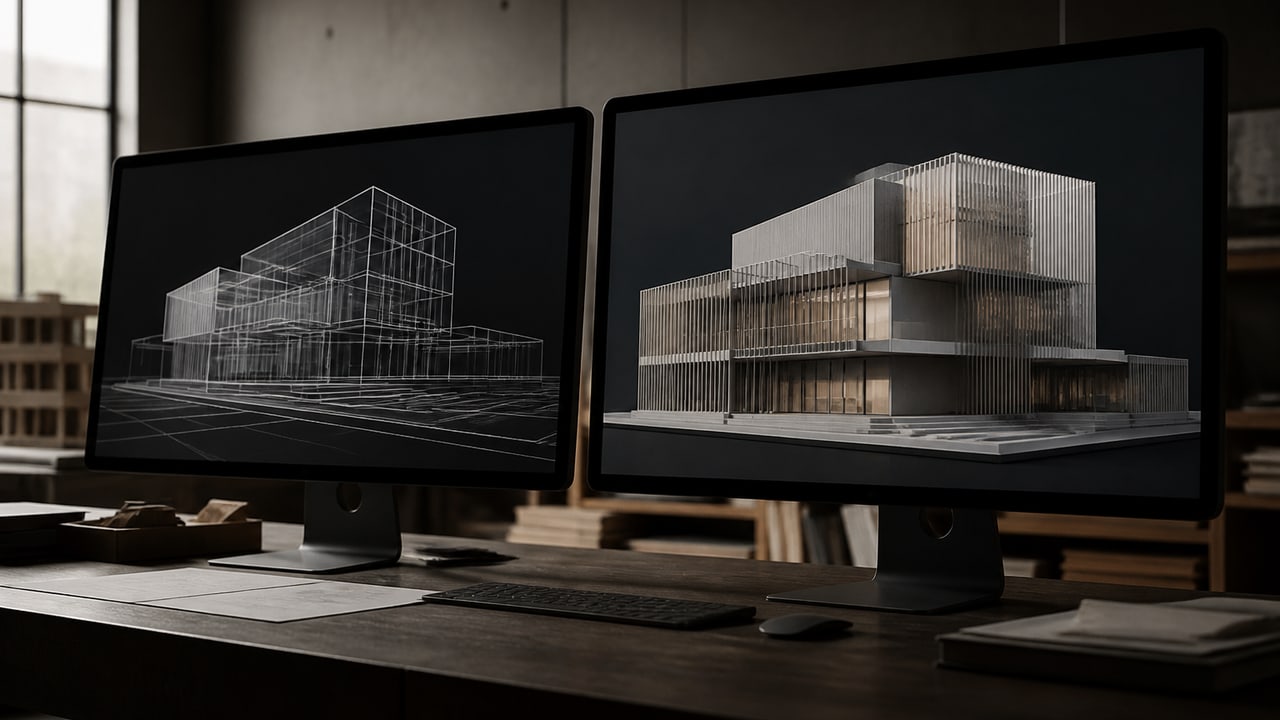
Revit vs ArchiCAD for hiring a remote drafter, what to test before you hire, which your U.S. consultants expect, and how to match the tool to your firm.
Revit vs. ArchiCAD Drafters: What to Test Before You Hire Remote
For most U.S. firms hiring a remote drafter, Revit is the safer default because your structural engineers, MEP consultants, and general contractors almost all expect Revit files, so a Revit drafter drops into existing coordination with no friction. ArchiCAD wins for design-focused, Mac-based studios that control their own workflow. Test the drafter against your real project files and your consultants' file expectations before you decide.
Here's the honest head-to-head, plus what to actually check before you hire.
Why This Choice Trips Up Firms Hiring Remotely
When you hire in-house, the tool is whatever your office already runs. Hire remotely and the question reopens, you can source a drafter fluent in either platform, so which one should you require? Get it wrong and every file exchange with your consultants becomes a conversion headache.
The core tension: Revit offers ecosystem gravity and multi-discipline coordination; ArchiCAD offers a gentler learning curve, cleaner design workflow, and native Mac support. Both sit at the top of the BIM market. The right pick depends less on which software is "better" and more on who you collaborate with. We've placed drafters on both, into U.S. residential and commercial pipelines, and the deciding factor is almost always the same one.
Revit vs. ArchiCAD for Remote Drafters at a Glance
| Category | Revit (Autodesk) | ArchiCAD (Graphisoft) |
|---|---|---|
| Best for | Multi-discipline U.S. firms, consultant coordination | Design-focused, Mac-based, small, mid studios |
| U.S. consultant expectation | Expected by most engineers, MEP, GCs | Less common; may require IFC exchange |
| Learning curve | Steeper (families, view management) | Gentler, more intuitive |
| Multi-discipline coordination | Strong (structural + MEP + arch) | Good, less deep than Revit |
| Platform | Windows only | Native macOS (Apple Silicon) + Windows |
| Remote talent pool | Largest; easiest to hire fast | Smaller but strong design talent |
| File exchange with U.S. teams | Native .rvt everywhere | IFC import/export (reliable, extra step) |
| Our verdict | Wins for most U.S. firms | Wins for Mac design studios |
Which Do Your U.S. Consultants Expect?
Revit wins this category, and for most U.S. firms it's the category that decides everything. U.S. firms lean heavily toward Revit because structural engineers, MEP consultants, and general contractors expect native Revit files (AEC Hub), coordination, clash detection, and handoffs all assume it.
ArchiCAD can exchange data with any of them through IFC, and its IFC implementation is well regarded. But IFC is a translation layer, and every translation is a place for something to slip. On a project with heavy consultant coordination, that extra step adds friction your remote drafter has to manage.
The nuance: if you control the full design workflow and don't hand models to Revit-based consultants, this advantage evaporates. Verdict: Revit wins on U.S. consultant compatibility, decisively, whenever outside coordination is involved.
Which Is Easier to Hire a Remote Drafter For?
Revit wins on talent availability. It has the largest global adoption and the deepest remote talent pool, roughly 45% of European architects use it as their primary BIM platform, versus about 27% for ArchiCAD (USP European Architectural Barometer), and its dominance is even stronger in North America. A larger pool means faster placement and easier replacement.
ArchiCAD's pool is smaller but concentrated in genuinely strong, design-minded practitioners. If your work is design-led, that specialization can be worth the narrower field.
The nuance: "easier to hire" only matters if the tool fits your work. A fast hire in the wrong platform still creates file friction. Verdict: Revit wins on speed and depth of the remote hiring pool.
Which Handles Multi-Discipline Coordination Better?
Revit wins on coordination. Its architecture, structural, and MEP tools live in one ecosystem alongside Navisworks and Autodesk Construction Cloud, so a remote drafter can work inside the same coordination environment your consultants use.
ArchiCAD handles architectural BIM beautifully and can coordinate across disciplines, but its structural and MEP depth isn't at Revit's level, which is why large multi-discipline firms standardize on Revit.
The nuance: for a pure architecture studio that outsources structural and MEP anyway, ArchiCAD's lighter coordination is rarely a real constraint. Verdict: Revit wins for multi-discipline production; ArchiCAD is enough for architecture-only work.
Which Fits a Mac-Based or Design-Led Studio?
ArchiCAD wins this one outright. It runs natively on macOS including Apple Silicon, while Revit is Windows-only, a hard stop for Mac studios that would otherwise need virtualization. ArchiCAD's design-centric interface and gentler learning curve also let a remote drafter become productive faster on design-heavy work.
Revit has no native Mac support, and its steeper curve means a new remote drafter takes longer to reach full speed.
The nuance: a Mac studio can run Revit through virtualization, but that's cost and complexity you feel every day. Verdict: ArchiCAD wins for Mac-based, design-first studios.
What to Test Before You Hire, in Either Tool
Whichever platform you land on, evaluate the remote drafter the same way. Give a paid test set built from a real, redacted project and check three things: technical correctness in your tool, adherence to your templates and standards, and, critically, whether their output round-trips cleanly with your consultants' files (native .rvt for Revit, a clean IFC exchange for ArchiCAD).
Then test communication on a live call about a real drawing, and confirm time-zone overlap for real-time coordination. A nearshore drafter working your hours turns file questions into ten-minute conversations instead of overnight waits. Roughly 85% of the professionals we place have already worked on U.S. projects, so tool fluency and U.S. standards usually clear together.
Who Should Choose What
Most U.S. firms with consultant coordination: hire a Revit drafter. It's what your engineers, MEP teams, and GCs expect, and the remote talent pool is deepest.
Mac-based, design-led studios that own their workflow: hire an ArchiCAD drafter. Native macOS, faster onboarding, and a design-first interface fit how you actually work.
Florida and other high-volume residential markets: usually Revit, because residential structural and truss coordination leans Revit, Florida alone posted 8.7% of 2025 U.S. structural engineering openings (CEEcareers), and those teams expect Revit files.
If you're unsure, default to Revit and require IFC fluency too, it keeps your options open.
The Verdict, Category by Category
| Category | Winner |
|---|---|
| U.S. consultant compatibility | Revit |
| Remote talent availability | Revit |
| Multi-discipline coordination | Revit |
| Mac / design-led fit | ArchiCAD |
| Overall | Revit for most U.S. firms; ArchiCAD for Mac design studios |
Pick the tool your collaborators already expect, then hire the drafter who's fluent in it and works your hours. The software fight is mostly settled by the people you send files to, so start there, not with the feature list.
Need a drafter vetted in either platform against your actual project files? That's the part we make quick.
- Revit
- ArchiCAD
- BIM software
Frequently asked questions
Is Revit better than ArchiCAD for U.S. firms?
For most U.S. firms, yes, not because it's objectively superior, but because your consultants, engineers, and general contractors expect Revit files, so coordination is frictionless. ArchiCAD is arguably better for design workflow and Mac studios, but its advantage fades the moment heavy outside coordination enters the project.
Can an ArchiCAD drafter work with my Revit-based consultants?
Yes, through IFC import and export, which ArchiCAD handles reliably. The catch is that IFC is a translation step, so on coordination-heavy projects it adds a bit of overhead your drafter must manage. If most of your collaborators are on Revit, a Revit drafter removes that step entirely.
Where do Florida firms find remote Revit or ArchiCAD drafters?
Through nearshore AEC-specialized staffing partners that place Latin American drafters with U.S. project experience and Florida-hours overlap, not generalist freelance sites. Specialization is what gets you a drafter who already knows U.S. residential standards and your platform, rather than one you have to train on both.
Should I let each remote drafter use their preferred tool?
No, standardize on one platform per project to avoid constant file conversion. Choose the tool your consultants expect (usually Revit), then hire drafters fluent in it. Mixing platforms inside one project multiplies the exact file-exchange friction this decision is meant to prevent.