Does Your Nearshore Team Know Texas From California?
Share this article


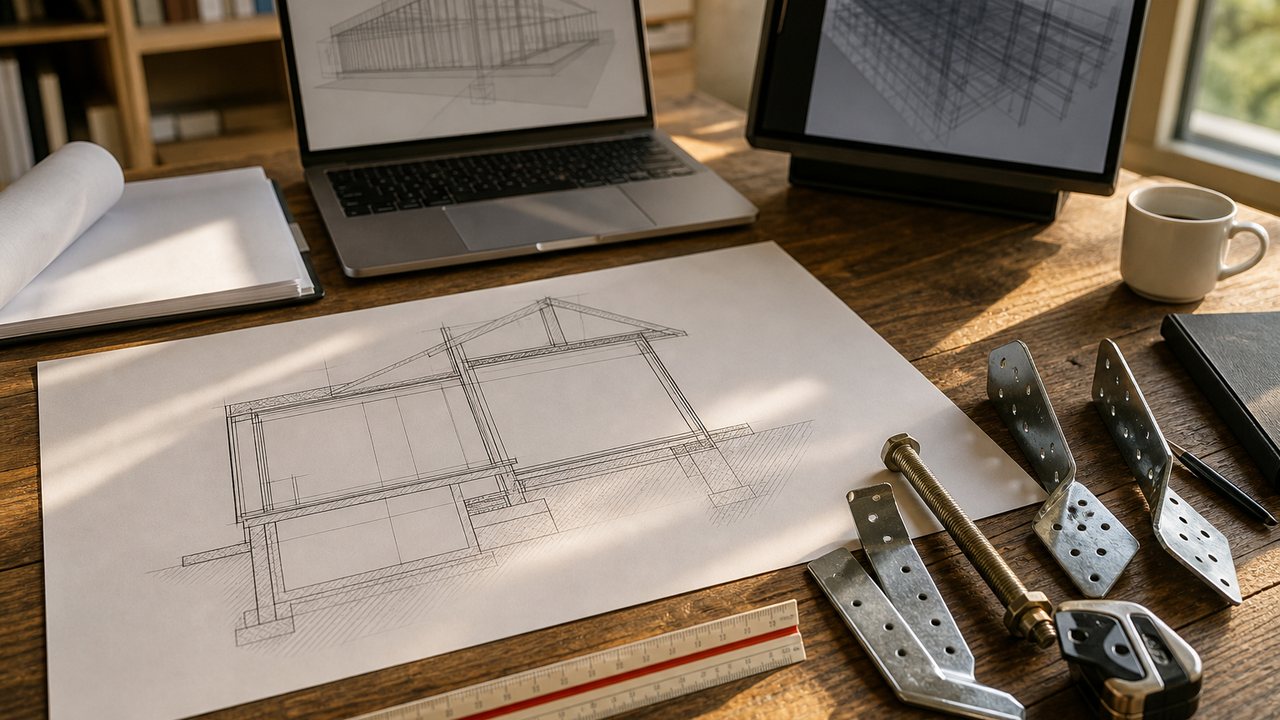
A state-by-state checklist to vet whether your nearshore drafters know the codes that get permits signed: Title 24, Texas IRC, Florida wind.
Why "knows US codes" isn't specific enough
A nearshore drafter who "knows US codes" can still produce drawings that fail plan check, because codes are adopted and amended state by state. Before you hire, confirm the person has actually worked in your state's code: California's Title 24, Texas's IRC-based residential provisions, or Florida's hurricane requirements. The checklist below is how you test it.
Most of the country builds on the International Code Council's model codes: the IRC for one- and two-family homes, the IBC for larger buildings. But states adopt different editions and layer their own amendments, so "the IRC" in one state is not the code enforced in another.
Get this wrong and the cost is concrete: redlined permit sets, resubmittals, and a schedule that slips weeks. It's the exact failure mode behind the permit set as the real test of a remote hire.
California: Title 24, seismic, and energy
California publishes its own Title 24 Building Standards Code through the Building Standards Commission, including the California Residential and Building Codes and the Part 6 Energy Code. A drafter needs fluency in Title 24 energy compliance and seismic detailing, requirements that barely register in most other states. Ask for California project samples specifically, not generic "US experience."
Texas: IRC base, wind, and local adoption
Texas builds on the IRC and IBC, but adoption and enforcement happen at the municipal level, and Gulf-facing jurisdictions add wind-borne-debris and uplift provisions. A drafter who's worked in Austin isn't automatically fluent in Houston's coastal requirements. Ask which Texas jurisdictions they've actually drawn for.
Florida: the hurricane code and Miami-Dade NOAs
The Florida Building Code layers High-Velocity Hurricane Zone provisions and product approvals, including Miami-Dade Notices of Acceptance (NOAs), on top of the model code. A drafter unfamiliar with HVHZ detailing will miss required connections and approved assemblies, and those misses surface at the worst possible moment: plan review.
The vetting checklist
Before the first drawing, run through this:
- Ask for two or three permit sets from your specific state, not a generic portfolio.
- Give a short paid test: a wall section, egress check, or energy note for your jurisdiction.
- Confirm which code edition they've worked in (e.g., 2022 California Building Code, 2023 Florida Building Code).
- Check they understand the difference between design-intent drawings and permit-ready documentation.
- Verify a US-licensed architect or engineer reviews and stamps: the drafter produces, the professional of record signs.
For production-heavy work, our pages on CAD drafting for homebuilders and CAD outsourcing services show how firms scale this without losing code consistency across projects.
What to confirm before the first drawing
- "US codes" is too broad: vet for your specific state and code edition.
- California means Title 24 energy and seismic; Texas means IRC plus local wind; Florida means HVHZ and NOAs.
- A short paid, state-specific test beats any résumé claim.
- The drafter produces; a US-licensed professional of record reviews and stamps.
Once a project is underway, the same state can still amend its code mid stream; see state building code amendments mid project for how to keep the project moving when that happens.
The difference between familiar and fluent
Plenty of drafters have "seen" US codes. Far fewer have shipped a permit set in your state.
That gap is where schedules die, and it's entirely testable before you hire.
It's why WorldTeams vets for real US-project experience, with most professionals having worked directly on US jobs before they ever join your team.
- building codes
- permit sets
- nearshore drafters
Frequently asked questions
Answers to the questions readers ask most about building codes.
Can a nearshore drafter produce permit-ready drawings for my state?
Yes, when they've worked in your state's code edition and a US-licensed professional of record reviews and stamps the set. The drafter produces the documentation; licensure and stamping stay with your firm. The gating factor is same-state code experience, which is exactly what the checklist above tests for.
Do I still need a US-licensed architect if my drafter is nearshore?
Yes. Licensure and stamping are legal requirements tied to the professional of record in the US. Nearshore talent augments your production capacity; it doesn't replace the stamp. The model works precisely because it separates "who draws" from "who signs."
How do I test state-code knowledge before hiring?
A short paid task in your jurisdiction (a code-compliant wall section, an egress check, or a Title 24 energy note) tells you more than any CV. Pair it with a portfolio review of same-state permit sets, and you'll know within a day whether the person is fluent or just familiar. Our overview of how firms source vetted Latin American talent covers the rest of that screen.