State Building Code Amendments Mid Project: What to Do
Share this article


Key takeaways
- States adopt and amend building codes on their own schedules, so a code that was current when you started a project can change before you finish it.
- A grace period after a code change usually only protects permits already in queue; it rarely covers a set that still needs major revisions.
- Local jurisdictions can layer their own modifications on top of a state code, so the state calendar alone is not the full picture.
- The real cost of a mid project amendment is the rework it creates for drafting and permitting, not the update itself.
- A drafting team that can flex in size absorbs a revision pass without pulling senior staff off other active projects.
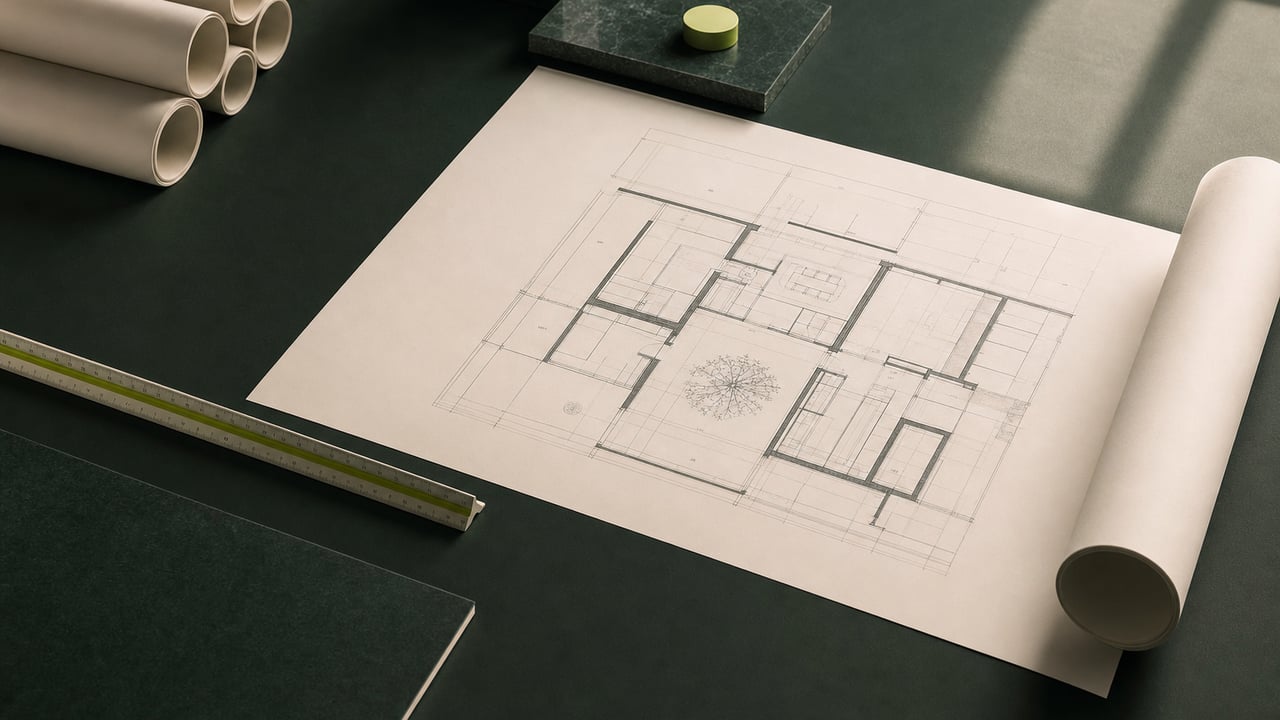
State building code amendments can stall an active project fast. Here is how to spot them early and keep your drafting team working through the change.
A state building code amendment rarely arrives on a convenient day. It lands in the middle of a permit set, a construction document package, or a round of plan review, and whoever is running the project has to figure out, fast, what changed and what it means for the drawings already in motion. That gap between "the code changed" and "we fixed the drawings" is where schedules slip and budgets absorb hours nobody planned for.
Most guidance on building code changes stops at telling you a code changed and when. It does not answer the harder operational question: who actually re-checks and revises an active set once the code under it moves, without stalling the rest of the project.
State Building Code Amendments Happen On Staggered, Independent Clocks
There is no single national update day. Each state runs its own adoption process, on its own timeline, often built around the International Code Council's three-year model code cycle but rarely synchronized with any neighboring state. State building code amendments move on staggered, independent timelines instead of all at once, which is exactly why a code that was current when you started a project can be out of date before you finish it.
New Hampshire moved to the 2024 ICC code family effective July 1, 2024, covering the IBC, IRC, IMC, IPC, and related codes, according to the New Hampshire Building Officials Association. South Carolina, by contrast, is still enforcing its 2021 codes and does not move to the 2024 International Codes until a statewide effective date of January 1, 2027, per the technical bulletin published by ARCXIS. Georgia adopted the 2024 International Codes on January 1, 2026, but kept its own 2015 state energy code in place instead of switching to the newer energy chapter, the same bulletin notes.
If your firm runs projects in more than one state, you are not tracking one calendar. You are tracking several, each moving independently, and each capable of shifting mid project.
A Grace Period Only Covers Permits Already In Queue
When a state does move to a new code, it usually builds in a grace period so projects do not stop overnight. New Hampshire's 2024 cycle included a six month grace period, from July 1, 2026 to December 31, 2026, letting permits already filed proceed under the 2021 or 2024 codes, per the New Hampshire Building Officials Association.
That window helps if your permit application is already in the queue. It does not help if your set still needs real design work, because a grace period protects paperwork timing, not drafting hours. If a project is still in production when the clock on the old code runs out, someone still has to revise the drawings to the new edition before the permit goes in.
South Carolina adds another layer: its Building Codes Council runs an ongoing local modification process, with a 180 day public comment window before adopting statewide changes and a separate track for local jurisdiction requests, such as a Greenville County modification to the residential code, according to the South Carolina Department of Labor, Licensing and Regulation. A project can be affected by a change that never shows up as a statewide headline at all.
The Real Risk Lands On Drafting, Not Just Compliance
Industry guidance on this topic tends to frame the fix as better coordination: track the calendar, read the bulletins, loop in the right consultants earlier. That advice is accurate and still leaves the actual bottleneck unanswered. Someone has to open the affected sheets, work out exactly what the amendment touches, and redraw or re-annotate accordingly, on top of whatever that person was already doing.
If your firm's drafting capacity is fixed, that work competes directly with new project starts and existing deadlines. A senior architect pulled into a revision pass is a senior architect not reviewing a different set or meeting with a different client that week. The code amendment itself might take an afternoon to read. Absorbing it without slowing anything else down is the part that is hard to plan for with a fixed in house team.
Our checklist for vetting a nearshore team's state code knowledge covers how to confirm a drafter already understands a state's code before they join a project. This piece picks up from there: what to do once a code you are already building against changes underneath you.
What To Put In Place Before The Next Amendment Lands
A few habits reduce how often an amendment catches a project off guard mid stream.
Keep a short list of every state and jurisdiction where you have active work, and check each one against its code council or building officials association page on a set schedule, not only when a client asks. Build a standard revision checklist into your template library so a code update becomes a defined task instead of an improvised one; our guide to a Revit template code compliance checklist walks through exactly that kind of standing checklist. Flag which active projects are close to a known adoption date, such as South Carolina's January 2027 effective date for the 2024 codes, so a revision pass can be scheduled rather than discovered at plan review.
None of that removes the need for extra drafting hours when a change does land. It just means the work is scheduled instead of scrambled.
How A Flexible Drafting Team Absorbs The Revision Pass
The firms that handle a mid project amendment calmly are usually the ones whose drafting capacity can flex. WorldTeams has helped build remote drafting and BIM teams for more than 370 companies in the US, with pre-vetted professionals who work in the same time zone as the client, so a revision pass can go to someone already matched to the project instead of competing with a fixed roster's existing workload.
That means a code amendment becomes a staffing decision, not a crisis: add capacity for the weeks the revision takes, keep your senior staff on the work they were already doing, and scale back down once the set is current again. If you want to understand how a remote drafter gets up to speed on a region's codes in the first place, our piece on what to check before a remote drafter touches US permit sets covers that groundwork.
- building codes
- architecture outsourcing
- project operations
Frequently asked questions
Answers to the questions readers ask most about state building code amendments.
What are the recent amendments to the New Hampshire state building code?
New Hampshire moved to the 2024 ICC code family, including the IBC, IRC, IMC, and IPC, effective July 1, 2024, and paired that update with a six month grace period, from July 1 to December 31, 2026, for permits already in queue, according to the New Hampshire Building Officials Association. See every state changes its code on a different clock for how that compares to other states.
What does a code adoption grace period actually cover?
A grace period usually protects permits that are already filed, letting them proceed under the older code edition for a set window. It does not cover a project that still needs design work, because the drawings still have to be revised to the new code before that permit can be filed. The section on what a grace period only covers walks through New Hampshire's six month window as an example.
Why does a state building code amendment create rework instead of just a paperwork update?
An amendment changes requirements that are already baked into an active drawing set, so someone has to open the affected sheets, work out what the new code touches, and redraw or re-annotate accordingly. That is design and drafting work, not a filing step, which is why it competes with everything else a team already has scheduled. Our checklist for vetting a nearshore team's state code knowledge covers the related, earlier step of confirming code knowledge before a project starts.
Do all states amend their building codes on the same schedule?
No. Georgia adopted the 2024 International Codes effective January 1, 2026, South Carolina is not moving to the 2024 codes until January 1, 2027, and Florida is still finalizing its 2026 edition, each on an independent timeline, per the technical bulletin from ARCXIS. A firm working across several states needs to track each calendar separately, as covered in every state changes its code on a different clock.
How can a firm keep an active project on schedule when the code changes under it?
Treat the revision pass as a defined, staffable task rather than an emergency: confirm exactly what changed, apply it through a standard checklist, and add drafting capacity for the weeks that pass takes instead of pulling a senior architect off other work. The section on how a flexible drafting team absorbs the revision pass explains how a same time zone, pre-vetted drafting bench makes that possible, and our Revit template code compliance checklist gives the standing checklist piece.