How to Staff a Full AEC Team Without Breaking Coordination
Share this article


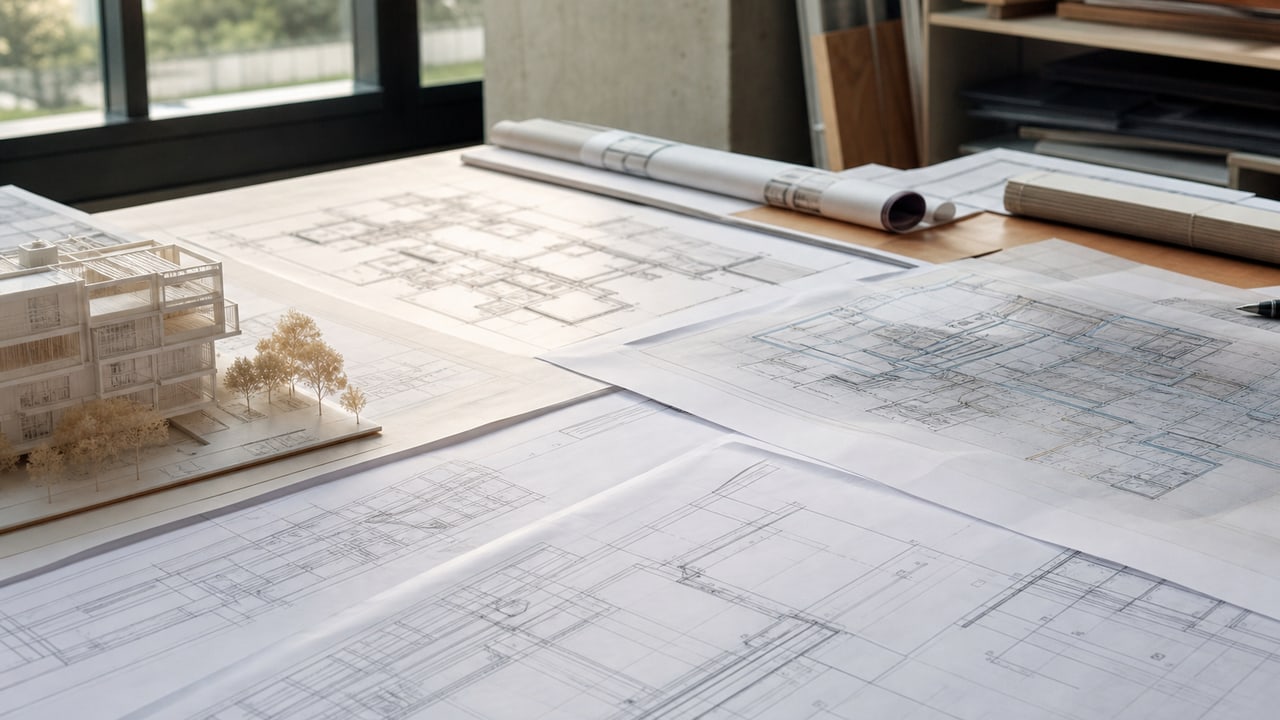
Architecture is a third of the problem. How each AEC discipline is staffed differently, architects, drafters, structural, MEP, BIM coordination, and where projects break.
Why “AEC” Is Three Hiring Problems, Not One
Staffing an AEC team isn’t one decision, it’s several. Architects, drafters, structural and MEP engineers, and BIM coordinators are vetted for different things, and the projects that fail usually fail at the seams between them. The fix is to staff each role for its own criteria, and to staff coordination as a role in itself.
AEC stands for architecture, engineering, and construction, the three domains that have to converge on one buildable set. Most firms staff the “A” well and treat the “E” and “C” as extensions of it. That’s where the trouble starts. McKinsey has documented for years how construction productivity lags other industries, and a large share of that drag is coordination waste: rework, clashes, and RFIs that trace back to disciplines that were staffed and managed in isolation.
How Each Discipline Is Staffed Differently
Hire each role for what actually predicts success in it, not a generic “Revit + experience” filter:
| Role | Vet primarily for | Fails when hired on |
|---|---|---|
| Architect | Design judgment, code fluency, coordination | Portfolio looks alone |
| Drafter | Accuracy, standards discipline, throughput | Software badges only |
| Structural engineer | Code judgment (IRC/IBC), calc quality | Analysis-software fluency alone |
| MEP engineer | Systems coordination, energy-code knowledge | 2D drafting speed |
| BIM coordinator | Clash workflows, cross-discipline literacy | Modeling skill without coordination habit |
The Coordination Gap: Where AEC Projects Actually Break
A project rarely fails because one discipline is bad. It fails at the interface: the beam that lands in a duct run, the panel in a doorway, the architectural sheet that no longer matches the structural set. Each discipline did its job; nobody owned the space between them.
This is the hidden cost of staffing by discipline and coordinating by accident. When every specialist optimizes their own model and the seams are checked late, or only in the field, the result is exactly the rework and RFI cycle that makes AEC projects slip.
Staffing Coordination as a Role, Not an Afterthought
The fix is to treat coordination as a staffed function, not a hope. That can be a dedicated BIM coordinator, a scheduled clash-detection cadence, and a checking layer that runs before every milestone, the same two-layer discipline that keeps a remote team aligned. On a multidisciplinary team, whoever owns coordination is as important as any single engineer.
In-House, Freelance, or Nearshore for AEC
Full local hiring across every discipline is slow and expensive; stitching together freelancers per discipline reintroduces the coordination gap. Embedded nearshore capacity, multiple disciplines, same time zone, coordinated under your standards, is what lets a firm scale the whole AEC stack without the seams failing. The judgment of what to keep in-house still matters; see what to delegate and what to never outsource.
What’s the biggest risk in multidisciplinary staffing?
The coordination gap, staffing each discipline well but leaving the interfaces unowned. It’s the source of most clashes, rework, and RFIs, and it’s a staffing and management problem, not a talent one.
Signs Your AEC Coordination Is Already Failing
You don’t need a failed project to spot the gap. Watch for these:
- Plan-check comments that are really inter-discipline conflicts, not single-sheet errors.
- Structural or MEP updates that reach the architect days late, if at all.
- Clashes discovered in the field that a model check would have caught.
- Every discipline reports “done,” yet the sets don’t agree with each other.
Staff the Whole Team, Not Just the Architecture
Architecture is one third of the problem. The firms that scale cleanly staff the A, the E, and the C, and the coordination between them, as one team.
That’s the model WorldTeams is built for. See how WorldTeams staffs across the AEC disciplines.
When the E in AEC is the bottleneck, the workload rarely arrives on a steady schedule; see how to staff engineering work for a fluctuating project pipeline.
- AEC staffing
- team coordination
- multidisciplinary teams