How to Make Ceilings Feel Taller Without Construction
Share this article


Key takeaways
- A standard eight-foot ceiling can read taller through paint, drapery placement, vertical lines, and furniture choices, with no construction involved.
- Matching the ceiling and walls in one flat or matte color removes the line where the eye normally measures a room's height.
- A curtain rod mounted near the ceiling, with panels that reach the floor, stretches the window further than its actual frame.
- Low profile furniture and uplighting both work by changing what the eye compares the ceiling against, not by changing the ceiling itself.
- When a room still feels short after every decorating trick, the plan, the window sizes, or the framing itself may be the real constraint.
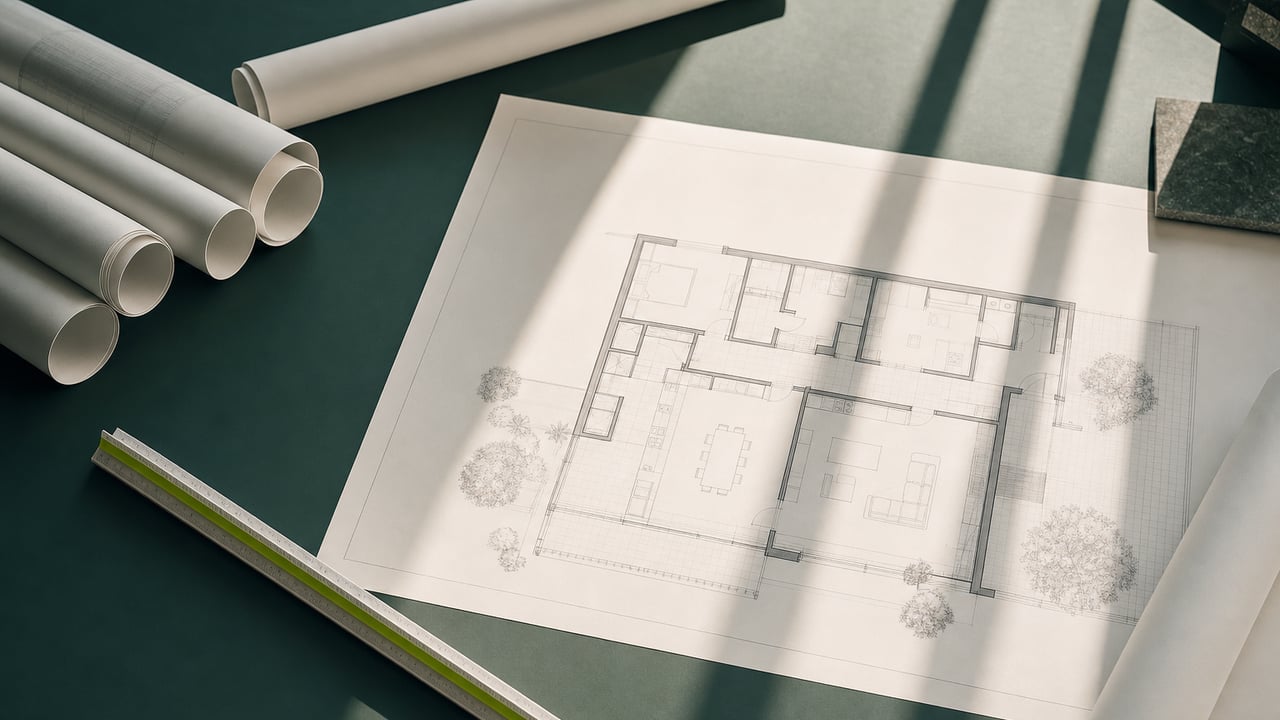
Paint, drapery, and lighting choices that make a standard eight-foot ceiling feel taller, plus how to tell when the real fix is the floor plan, not the paint.
Paint Decides More Than People Think
A ceiling that feels short is usually a perception problem. It is rarely a measurement problem. Paint is the single highest leverage fix available for it. Painting the walls, trim, doors, and ceiling the exact same color removes the sharp line where the eye normally stops. Use a flat or matte finish so shadows stay soft. Without that stopping point, the eye reads the wall and ceiling as one continuous surface. One surface reads taller than two separate planes ever could.
A lighter version works almost as well, if a full color match feels like too much commitment. Keep the ceiling a soft white, or a shade or two lighter than the walls, still in a flat or matte finish. A less common but effective option, documented across several interior design guides, is painting the ceiling a high gloss white. Gloss bounces ambient light upward and reads as open rather than heavy. Either direction, the goal is the same: stop giving the eye a hard line to measure against.
Hang Curtains Above the Window, Not On It
Curtains are one of the most common places people get this wrong. The instinct is to mount the rod just above the window frame. That choice shortens the wall rather than stretching it. Mount the rod as close to the ceiling as the room allows. Let the fabric panels run all the way to the floor. The eye then follows the full height of the drapery, instead of the shorter height of the window glass.
Panel style matters almost as much as placement. Long, pinch pleat, or vertical panels pull the eye upward in one continuous line. Short, café length, or grommet top curtains interrupt that line and chop the wall into visible segments. The same logic applies to built ins. Running kitchen cabinets, bookshelves, or bathroom tile all the way to the ceiling removes another one of those visual stopping points, instead of leaving a gap near the top.
Vertical Lines Pull the Eye Upward
Anything that creates a strong vertical line in a room works in the same direction as tall curtains. It gives the eye a path to travel from floor to ceiling, instead of across the wall. Vertical shiplap, tongue and groove paneling, board and batten trim, or a vertically striped wallpaper all do this well. So does a tall, narrow piece of art, or a slim floor to ceiling mirror.
A single well placed vertical element can do more work than several smaller design choices combined. It gives the room one clear, unbroken line to follow. This is also why a room with only horizontal furniture, low art, and wide, squat accessories tends to feel more compressed. There is nothing in the space asking the eye to look up. Houzz's own roundup of low ceiling tricks shows several real rooms where this single change carried most of the visual lift.
Furniture and Lighting Change What the Eye Measures Against
None of these tricks change the actual ceiling height. The ceiling itself is never really the thing being judged. What gets judged is the empty space between the furniture, the fixtures, and the ceiling, and that negative space is easy to control through furniture choice. Low back sofas, armless chairs, platform beds, and slim media consoles all leave more open air above them than a bulky, high backed equivalent would.
Lighting works the same way, from a different angle. A flat flush mount fixture sits close to the ceiling and tends to flatten it visually. A slim pendant, a semi-flush mount, track lighting, or recessed cans leave more visible ceiling plane around the fixture. Floor lamps, wall sconces, or hidden cove lighting that throw light upward add a soft glow. That glow makes the ceiling plane itself feel farther away, the same effect a skylight or a taller window achieves through daylight instead of a bulb. This is the same negative-space logic covered in our outdoor living spaces guide, applied indoors instead of in the backyard.
When the Fix Is the Floor Plan, Not the Paint
All of the tricks above solve a perception problem. For most rooms with a standard eight foot ceiling, that is exactly the right level of fix. Occasionally a room still feels short after the paint, the curtains, the vertical lines, and the furniture swap. At that point the honest answer is that the ceiling was never really the issue. A window that is too small for the wall it sits in, a floor plan that crowds a tall piece of furniture into a narrow footprint, or framing that was never designed with ceiling height as a priority, are plan level decisions. They are not decorating ones, the way stair proportions and code compliance are a design decision rather than a finish choice, or the way a modeled ceiling detail in Revit has to be solved before it is ever painted.
That is the point where the conversation shifts from a paint color to a design professional. Fixing a floor plan or a window opening touches structure, code, and construction sequencing in a way a color swatch never will. WorldTeams places pre-vetted architecture and design professionals, drawn from the top 3% of applicants, in the same time zone as the client's own team. That fits firms that need plan level support on an ongoing basis, rather than a one time consult. For the staffing side of that conversation, WorldTeams' architecture outsourcing page covers how that works in practice.
- interior design tips
- ceiling height
- architecture design
Frequently asked questions
Answers to the questions readers ask most about Making a low or standard ceiling feel taller.
What is the fastest way to make a low ceiling feel taller without construction?
Start with paint. Painting the walls, trim, and ceiling the same flat or matte color removes the sharp line where the eye normally stops and measures the room's height, which is the cheapest and fastest change available. See the paint and color tricks section for the exact approach, drawn from Metrie's design guide.
Does painting the ceiling the same color as the walls actually make a room feel taller?
Yes, because a visible color break between wall and ceiling gives the eye a clear stopping point, and removing that break lets the eye read the wall and ceiling as one continuous surface instead of two separate planes. A flat or matte finish on the ceiling also minimizes shadow lines that would otherwise recreate that break. Details are in the paint and color tricks section.
Where should curtain rods be mounted to make a ceiling look higher?
Mount the rod as close to the ceiling as possible, well above the window frame, and let the panels run all the way to the floor. The eye follows the full height of the fabric rather than the shorter height of the window, which makes the wall read taller than it is. Long vertical panels work better for this than short, café length, or grommet top styles. More on placement is in the curtains and trim section.
What color should a ceiling be painted to make it look higher?
A soft white, or a shade a step or two lighter than the walls, in a flat or matte finish reflects light evenly and avoids the shadow lines a glossier finish would show. A high gloss white ceiling is a second valid option, since it bounces light upward and reads as open rather than heavy. Either choice is covered in the paint and color tricks section.
Can furniture choice actually change how tall a ceiling feels?
Yes. Low back sofas, armless chairs, platform beds, and slim media consoles leave more open space between the furniture and the ceiling, and that empty space is what the eye uses to judge how much room is left overhead. Swapping a flush mount light fixture for a slim pendant or recessed lighting has the same effect from the top down. See the furniture and lighting section for specifics.
When does a low ceiling problem need an architect instead of a decorating fix?
When the room still feels short after color, drapery, and furniture changes, the real constraint is usually the floor plan, the window sizes, or the ceiling framing itself, and no paint color changes any of those. That is a design decision, not a decorating one, and it is covered in the closing section, along with where WorldTeams' architecture outsourcing page fits in.