Architectural CGI: Transforming the Way We Visualize Buildings
Share this article


Key takeaways
- Architectural CGI produces photorealistic 3D visualizations of a building before it exists, showing lighting, materials, and atmosphere as they will read.
- It comes in four types: static renderings, animated walkthroughs, virtual reality experiences, and interactive 360-degree views.
- CGI does not replace technical drawings. Drawings instruct the builders; CGI persuades the people who decide.
- Approvals move faster because a stakeholder who can see the finished space gives earlier and more specific feedback.

In today’s fast-paced architectural industry, visual communication has become more essential than ever. Clients, developers, and stakeholders need to understand what a project will look like long before the first brick is laid. Enter Architectural CGI (Computer-Generated Imagery) — a cutting-edge solution that is revolutionizing how we visualize, present, and develop buildings around the world.
This technology combines architectural precision with creative storytelling, offering lifelike renderings that go beyond blueprints and floorplans. Let’s explore how architectural CGI is transforming the architectural landscape and why more firms are relying on it than ever before.
What Is Architectural CGI?
Architectural CGI refers to the process of creating realistic, three-dimensional visualizations of buildings or interior spaces using specialized software. These digital renderings help architects, developers, and designers simulate real-world environments and designs in a visually compelling way.
Unlike traditional drawings or 2D plans, CGI allows for immersive, photorealistic presentations. Through tools like 3D CGI architectural visualization, architects can walk clients through future projects, demonstrating lighting effects, textures, and even seasonal changes in real time.
The Evolution of Visualization in Architecture
The history of architectural visualization has evolved from hand-drawn sketches and physical models to digital 2D CAD drawings, and now to fully rendered 3D CGI models. This transformation has made design communication more dynamic and accessible.
In the past, miscommunication or lack of visualization tools often led to client dissatisfaction or design revisions late in the process. Today, CGI architecture eliminates ambiguity by showing the finished product in stunning detail before construction even begins.
Why Architectural CGI Matters More Than Ever
In competitive markets, being able to communicate ideas effectively is crucial. Here’s why architectural CGI has become indispensable:
1. Realistic Visualization
With CGI rendering, you can present projects in their natural settings, complete with landscaping, furniture, materials, and lighting.
2. Improved Client Communication
Clients often struggle to read architectural plans. CGI provides a common visual language that helps bridge the gap.
3. Accelerated Approval Processes
Municipal and regulatory approvals are easier to obtain with clear, visual materials that showcase project compliance and design intent.
4. Enhanced Marketing & Sales
Architectural CGI companies create visuals that can be used in brochures, online listings, and sales presentations, making them invaluable for real estate marketing.
Types of Architectural CGI
1. Static Renderings: Still images showing the exterior or interior of a project in detail.
2. Animated Walkthroughs: Dynamic videos that guide viewers through the design.
3. Virtual Reality Experiences: Immersive interactions using VR headsets for a true-to-life feel.
4. 360-Degree Views: Interactive environments accessible via web or mobile platforms.
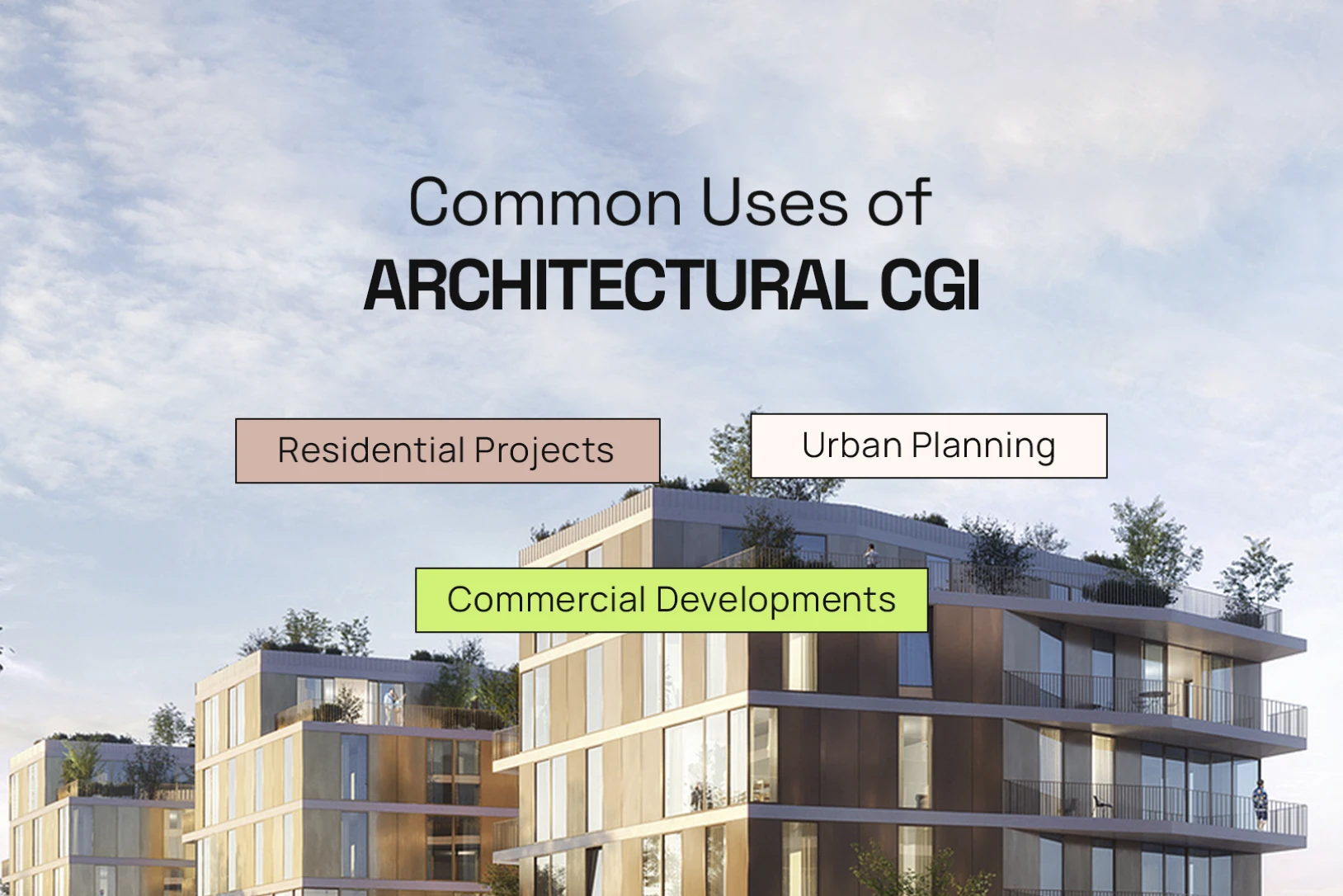
Common Uses of Architectural CGI
These forms of 3D CGI architectural visualization provide flexibility depending on the purpose and audience.
Residential Projects: Showcase custom homes and renovations in full detail.
Commercial Developments: Preview malls, offices, and mixed-use buildings for investors.
Urban Planning: Visualize entire neighborhoods or city blocks.
Interior Design: Display material palettes, furniture layouts, and lighting schemes.
Firms often rely on architectural CGI companies to produce content that supports presentations, pitches, and marketing efforts.
The Role of CGI Rendering in Design Development
CGI is not just for the end of the project; it can be an essential tool during the design process. Architects and designers use CGI rendering to test ideas, explore material options, and iterate on design choices before making costly decisions.
This dynamic feedback loop ensures that design flaws are spotted early and that the client remains involved throughout the process. As a result, outsourcing architectural services that include CGI capabilities is becoming increasingly common.
Outsourcing Architectural CGI: Why It Makes Sense
Outsourcing architectural services, particularly CGI, offers multiple advantages:
Access to Specialized Talent: Partner with experts in CGI architecture who understand lighting, materials, and design principles.
Cost Efficiency: Save on hiring in-house rendering teams or purchasing expensive software.
Faster Turnaround: Meet deadlines with teams who focus solely on producing high-quality visual content.
With the rise of global collaboration, many architecture firms now work withCGI companies that offer flexible packages tailored to their needs.
Learn how to cut labor costs while hiring the best talent in 2026
Download our FREE guide to learn how!
Integrating CGI into Architectural Services
From concept to client approval, architectural CGI integrates seamlessly with a variety of architectural phases:
Schematic Design: Test massing and layout ideas.
Design Development: Present material and lighting studies.
Client Presentation: Deliver compelling visuals to secure approval.
Construction Documentation: Support the design intent alongside technical drawings.
Incorporating CGI within your broader architectural design services improves client satisfaction and project success rates.
CGI Architecture and the Future of Visualization
As technology evolves, so does CGI architecture. The future includes:
AI-enhanced Rendering
Real-time Collaboration Tools
Cloud-based Visualization Platforms
Augmented Reality Integration
These innovations will further enhance communication and bring clients even closer to the creative process.

Final Thoughts: Unlocking the Power of CGI with WorldTeams
At WorldTeams, we understand the value of precision and impact when it comes to architectural visualization. That’s why we offer tailored solutions in 3D CGI architectural visualization and CGI rendering through a network of highly skilled visualizers and drafters. Whether you’re an architecture studio, real estate developer, or interior designer, we can match you with top Latin American talent to elevate your presentations and win more projects.
Our outsourcing architectural services are designed to streamline your production, reduce costs, and deliver outstanding visual content that resonates with clients. Let us help you bring your ideas to life with compelling, photorealistic CGI.
If you are deciding which visual formats a project actually needs, our guide to 3D rendering services compares stills, floor plans, walkthroughs, and VR360 side by side.
Get in touch with WorldTeams today to explore how our architecture outsourcing services can support your next big project.
Sources
- V-Ray, Chaos (the rendering engine used for photorealistic output).
- Enscape, Chaos (the real-time engine that renders inside CAD and BIM tools).
Frequently asked questions
Quick answers about what architectural CGI is, the formats it comes in, and how it fits next to technical drawings.
What is architectural CGI?
Architectural CGI is the production of realistic three-dimensional visualizations of buildings and interiors using specialized software. It lets architects, developers, and designers simulate a space before it is built, and unlike a 2D plan it can be photorealistic and immersive, showing lighting, materials, and atmosphere as they will actually read.
What types of architectural CGI are there?
Four, and the article numbers them: static renderings, animated walkthroughs, virtual reality experiences, and interactive 360-degree views. Which one a project needs depends on whether the goal is a single approval image or an immersive experience. Our guide to 3D rendering services compares the full set of formats.
How is CGI different from a traditional architectural drawing?
A drawing is a technical instrument: precise, measurable, and made for the people who build. CGI is a communication instrument, made for the people who decide. A client who cannot read a section can still judge a rendered room, which is why the two coexist rather than replace each other. See types of architectural drawings for the technical side.
Why does CGI speed up project approvals?
Because it removes ambiguity from the conversation. When a stakeholder can see the finished space, feedback arrives earlier and is more specific, so the rounds of revision that usually stretch an approval get shorter.
What software is architectural CGI made with?
The article describes the work rather than the toolchain, so this is the general practice: the model is built in a CAD or BIM platform and then rendered with a dedicated engine, either an offline one for maximum photorealism or a real-time one when the priority is seeing changes as they are made.
Should a firm produce CGI in house or outsource it?
The article gives three reasons to hand it over: access to specialized talent, cost efficiency, and faster turnaround. WorldTeams places remote visualization professionals through architecture outsourcing, with onboarding in 72 hours.