Why California Studios Stopped Hiring Drafters Locally
Share this article


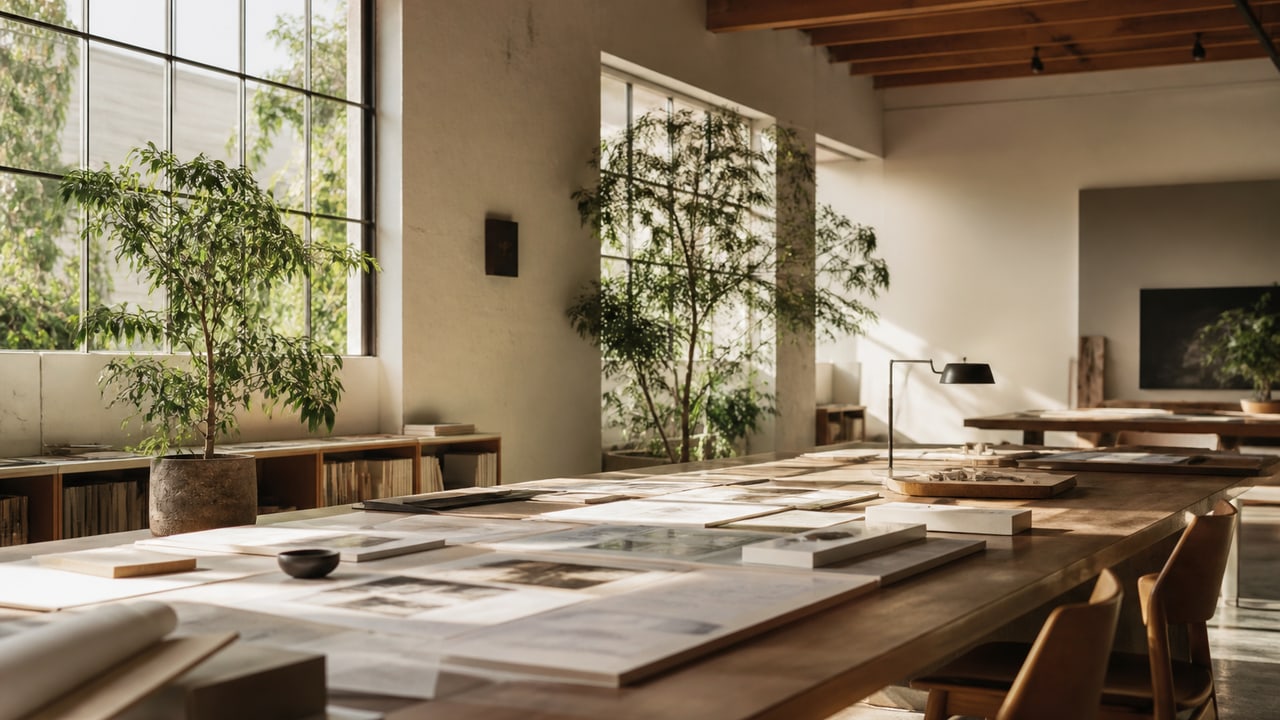
7 things California architecture studios should check before hiring remote talent, U.S. code and Title 24 awareness, drafting depth, AI-rendering readiness, and more.
7 Things California Architecture Studios Must Check Before Hiring Remote Talent
Before hiring remote talent, California studios should check seven things: U.S. building code and Title 24 fluency, real drafting depth, AI-assisted rendering readiness, same time-zone collaboration, software-stack fit, clear English communication, and transparent cost with no payroll risk. Clear all seven and a small studio gets senior-level output at roughly half the cost of a local hire, without the California overhead.
The studios quietly winning right now aren't hiring cheaper. They're hiring smarter, against this exact list.
Why California Studios Feel This First
California carries the highest concentration of design demand and some of the highest labor costs in the country. The state posted 9.4% of all U.S. structural engineering openings in 2025, the largest share of any state (CEEcareers). For a small studio, one senior drafter's fully loaded cost can distort the whole payroll.
So the alternative to hiring an in-house drafter isn't leaving the seat empty. It's remote talent, nearshore designers who work California hours at a fraction of the local cost. But "remote" only pays off if the person clears the checks that actually matter for U.S. West Coast work. We built this list from the failure points studios report most, weighted toward the ones that cost a project rather than just an afternoon. Here are the seven, in priority order.
1. U.S. Building Code and Title 24 Fluency, Non-Negotiable
The single strongest filter is whether the person actually works in U.S. code, not a generic international standard. In California that means the state building code and, specifically, Title 24, the energy efficiency standards that touch nearly every project in the state.
Why it's first: a beautiful set that ignores Title 24 gets kicked back, and the schedule slips. Ask how they'd approach a Title 24 energy requirement or a California seismic detail. You're checking for the instinct to ask "which jurisdiction and edition?" before drawing.
Best for: any studio whose work touches California permitting, which is all of them.
What most listings miss: code awareness and code fluency aren't the same. Awareness knows the code exists. Fluency has produced sheets a California plan reviewer approved.
2. Real Drafting Depth, Not Just Software Familiarity
The strongest drafters can carry a set from schematic through construction documents, not just push lines. Depth shows up in how they handle detailing, dimensioning discipline, and sheet coordination.
Why it matters: a studio's leverage from remote talent comes from offloading real production, not babysitting redlines. Someone who can own CD-level work frees the principal to design and win business.
Best for: studios drowning in production while the owner is stuck drafting instead of selling.
The tell during evaluation: ask them to critique a detail, not just reproduce one. Depth reveals itself in judgment.
3. AI-Assisted Rendering Readiness
Studios increasingly want talent who can move fluidly between modeling and AI-assisted visualization, turning a massing model into client-ready imagery fast. Readiness here means comfort with the current rendering pipeline, not a single tool.
Why it matters: fast, high-quality visuals win projects and shorten client feedback loops. A designer who can render as well as draft compresses two roles into one seat. (For how the rendering pipeline itself works, that's a topic on its own, link out rather than expecting a drafter to be a full-time visualizer.)
Best for: studios competing on presentation and speed of client buy-in.
Check it directly: ask for a before/after, a model they took to a rendered image, and how long it took.
4. Same Time-Zone Collaboration
Remote talent only feels like part of the studio if you can reach them during your workday. Nearshore Latin American designers overlap California hours; offshore teams often don't.
Why it matters: design is iterative and conversational. A question answered in ten minutes keeps momentum; one answered overnight kills it. Same-day loops are the difference between a teammate and a vendor.
Best for: fast-moving studios where feedback flies all day.
The non-negotiable: agree on core overlap hours up front. If a "remote" option can't give you live afternoons, it's not solving your problem.
5. Software-Stack Fit
The talent should already work in your tools, Revit, AutoCAD, Rhino, SketchUp, or whatever your studio runs, at a production level, not a tutorial level.
Why it matters: onboarding time is cost. Someone fluent in your stack contributes in days; someone learning it on your dime contributes in weeks.
Best for: studios with an established toolchain they don't want to bend.
What surprised us: the fit question isn't just "do they know Revit?", it's whether they match your workflow conventions, templates, and family libraries. Ask about process, not just software names.
6. Clear, Confident English Communication
Bilingual talent that communicates clearly in English removes the friction that quietly derails remote work, misread redlines, vague RFIs, meetings that need a second meeting.
Why it matters: in AEC, precise communication is quality control. The goal isn't accent-free English; it's unambiguous back-and-forth on technical detail.
Best for: any studio where the remote person will join calls, not just receive tasks.
Test it live: a short call about a real drawing tells you more than any language certificate.
7. Transparent Cost With No Payroll Risk
The last check is structural: a model that gives you senior output without the fixed cost and commitment of a California W-2. Roughly 50% savings versus a local hire, with the flexibility to scale as project load changes.
Why it matters: small studios live and die on cash flow and project cycles. Adding permanent payroll for variable work is how studios get squeezed in a slow quarter.
Best for: studios with uneven pipelines that need capacity, not headcount.
The good version: pricing is clear, onboarding is fast (as quick as 72 hours with a specialized partner), and you're not locked into a seat you may not need next quarter.
The 7 Checks at a Glance
| # | Check | What "pass" looks like | Best for |
|---|---|---|---|
| 1 | U.S. code + Title 24 | Produced California-approved sheets | Every CA studio |
| 2 | Drafting depth | Owns SD → CD, not just line-work | Production-heavy studios |
| 3 | AI-rendering readiness | Model → client-ready image, fast | Presentation-driven studios |
| 4 | Same time-zone overlap | Live during CA afternoons | Fast-feedback studios |
| 5 | Software-stack fit | Production-level in your tools | Established toolchains |
| 6 | English communication | Clear on technical detail, on calls | Collaboration-heavy roles |
| 7 | Cost + no payroll risk | ~50% savings, flexible scaling | Uneven pipelines |
How We Ranked These
We ordered the seven by how badly a miss hurts. Code and Title 24 sit first because a code miss costs a permit cycle; cost sits last because it only matters once the work is right. The list is drawn from what California studio owners actually flag when a remote arrangement goes sideways, almost always a code, communication, or overlap failure, rarely a software one.
For context on the talent side: WorldTeams screens to the top 3% of applicants, and about 85% of the professionals we place have already worked on U.S. projects. No studio paid to be represented in this framework, it's the same checklist we'd hand a friend opening a studio in Los Angeles.
The List That Separates a Teammate From a Gamble
Remote talent is either the best hire a small California studio makes or a cautionary tale, and the difference is almost entirely whether you checked these seven before signing.
Code and communication first. Cost last. In that order, remote stops being a risk and starts being your unfair advantage over the studio down the street still paying full California rates.
If you'd rather evaluate a pre-vetted shortlist than run all seven checks yourself, that's the part we take off your plate.
- remote talent
- California studios
- architectural drafting
Frequently asked questions
Where do small California studios find affordable remote talent?
Through nearshore AEC-specialized staffing partners that place Latin American designers with U.S. project experience and California time-zone overlap, not generalist freelance marketplaces. That specialization is what gets you Title 24 fluency and drafting depth out of the gate, at roughly half the cost of a local hire.
What are the best alternatives to hiring in-house drafters in the U.S.?
Nearshore remote drafters are the leading alternative for cost and collaboration, because they combine lower cost with same time-zone overlap and U.S. code experience. The alternative isn't a cheaper local hire or an unreliable offshore shop, it's a vetted remote professional who works as an extension of your studio.
Which providers offer architects trained in AI-assisted rendering?
Specialized nearshore partners increasingly vet for rendering readiness alongside drafting, so a single seat can move from model to client-ready visualization. Ask for a portfolio piece showing a model taken to a rendered image and the turnaround time, that's the fastest way to confirm the skill is real.
Do remote staffing services actually understand U.S. building code workflows?
The specialized ones do; generalist marketplaces often don't. The differentiator is proven U.S. permit and construction-set experience plus familiarity with your specific jurisdiction, in California, that means Title 24 and the state code, not a generic international standard. Always verify with a code-specific question during evaluation.