Best Render Settings for Architecture: What Actually Works
Share this article


Key takeaways
- Lighting and shadow setup shape mood, depth and material realism more than any single engine setting.
- Camera height between 50cm and 170cm, with focal lengths of 18 to 35mm for interiors and 24 to 50mm for exteriors, keeps a render believable.
- A well-composed render at a modest resolution beats a high-resolution render with flat lighting and generic materials.
- Scale references, such as a 2.1m by 0.9m door or a 170cm human figure, catch the errors viewers notice without being able to name them.
- The harder problem is not learning these settings once. It is applying them the same way on every project, which is a staffing question as much as a technical one.
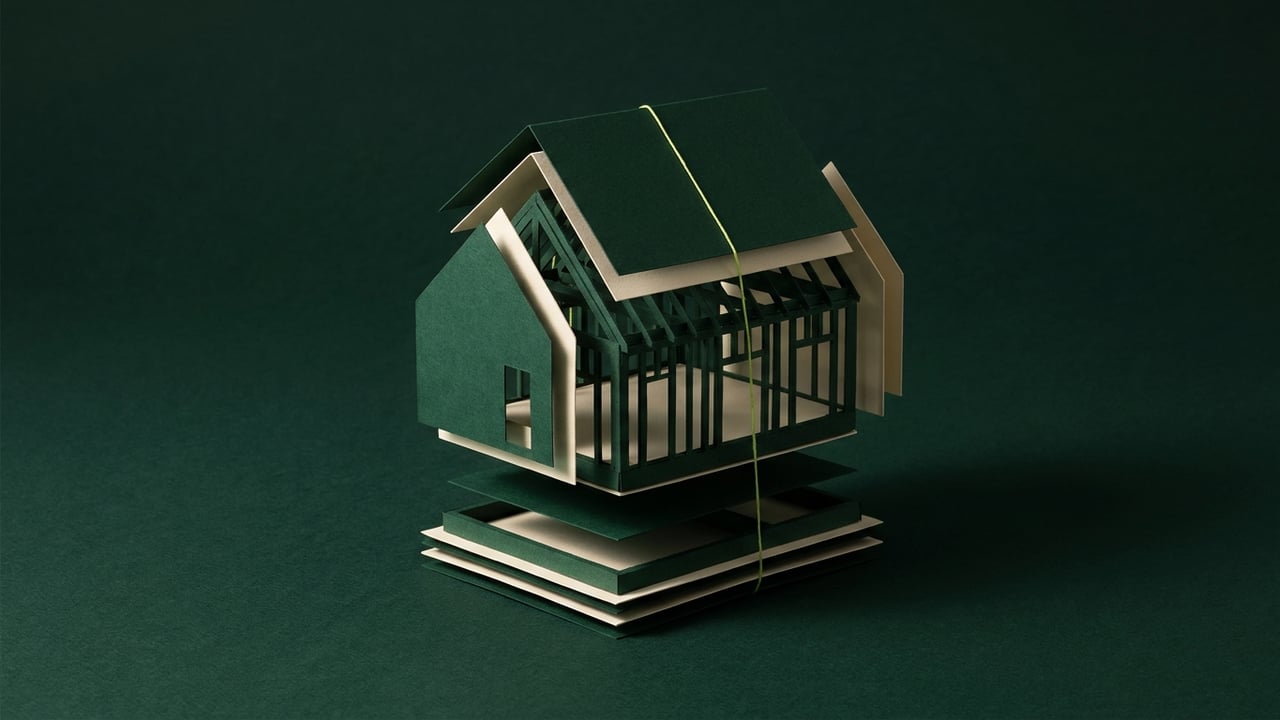
The best render settings for architecture start with lighting, camera height and scale, long before any engine slider. Here is what the research backs, and what to check first.
Most advice on the best render settings for architecture reads like a checklist: adjust the lighting, fix the camera angle, bump the resolution. The checklist is not wrong, but it skips the part that actually determines whether a firm gets good renders once or gets good renders every time.
The best render settings for architecture start with light
Lighting is the single most influential factor in any architectural render, a point ArchFine's breakdown of what makes a great render backs up directly. It shapes mood, depth perception, material appearance and spatial hierarchy before a viewer consciously notices any of it. Start by identifying every light source in the scene: for exterior shots, that means sun position, time of day and sky conditions; for interiors, natural light through windows alongside any artificial fixtures.
Shadows carry the same weight as the light that casts them. Hard, sharp shadows read as direct sunlight on a clear day. Soft, diffused shadows read as overcast conditions or large area lights. When the shadow quality does not match the implied weather, a render looks wrong even to a viewer who could not explain why.
Camera height and focal length are not creative choices
A realistic camera angle is a physically possible one. People do not typically view a building from more than two meters above the ground, so BluEnt's rendering tips recommend keeping the camera between 50cm and 170cm above grade, aside from deliberate aerial or drone-style shots, which is what makes a render feel inhabited rather than staged.
Focal length follows the same logic, and both ArchFine and BluEnt converge on similar ranges. ArchFine points to 18mm to 35mm equivalent focal length for interiors, wide enough to capture spatial volume without extreme distortion, and 24mm to 50mm for exteriors. BluEnt's own guidance lands close to that, with 30mm to 100mm for exteriors and 15mm to 55mm for interiors. Pushing outside those ranges for a single hero shot can be a deliberate choice, but doing it by accident is one of the fastest ways to undercut an otherwise careful render.
Composition and context matter more than resolution
Resolution is a technical specification, not a quality indicator, as ArchFine's own comparison of composition and resolution lays out. A high-resolution render with flat lighting and generic materials will consistently lose to a well-composed image at a more modest resolution. That is why the fundamentals covered here, lighting, camera placement, material behavior and context, deserve more attention than simply rendering longer or bigger.
Context does the rest of the work. A building rendered in isolation, without neighboring structures, vegetation or a believable sky, rarely looks finished, even when every other setting is correct. Varied vegetation, ground-level detail and a sky that matches the lighting setup all contribute to whether the final image reads as a photograph of a real place.
Scale and proportion checks that keep a render credible
Scale errors are one of the fastest ways to lose credibility. Oversized furniture, mismatched door dimensions or human figures that do not match real proportions trigger a sense that something is off, even when the viewer cannot identify exactly what. ArchFine's technical reference lists useful numbers to check against: a standard door close to 2.1m by 0.9m, residential ceilings around 2.4 to 2.7m, commercial spaces from 3.0 to 4.5m, and human figures at roughly 170 to 175cm.
Modeling in real-world units from the first step, and verifying the scale of any imported asset against the scene before rendering, prevents most of these errors from ever reaching a final image.
The harder problem is doing this the same way every time
Everything above is learnable in an afternoon. What is harder is applying it consistently, render after render, project after project, especially once a firm is producing visuals for more than one client at a time or handing the work off between a drafter and a dedicated renderer, the handoff covered in staffing the Revit to render handoff. That consistency gap is where render quality usually breaks down, and it is a staffing and process question as much as a technical one, which also shapes how 3D rendering services enhance client presentations.
A firm deciding whether to build this in house or bring in outside help can start with how to choose an outsourced rendering team before making that call.
This is the part of the problem WorldTeams actually works on. We pre-vet every professional we place, so a firm's render quality does not depend on whoever happens to be available that week, and every placement carries a two-week replacement guarantee if the fit is not right. If the real question is less "what settings should I use" and more "who owns this consistently," that is worth working through before the next deadline.
- architectural rendering
- render settings
- 3D visualization
Frequently asked questions
Answers to the questions readers ask most about Best render settings for architecture.
What is the single most important render setting to get right?
Lighting. It sets mood, depth perception, material appearance and spatial hierarchy before anything else in the scene. Sun position, color temperature and shadow softness need to match the implied time of day and weather, or the whole image reads as artificial. See why the best render settings for architecture start with light.
What camera height and focal length should an architectural render use?
Keep the camera between 50cm and 170cm above ground for most shots, since that mirrors how people actually see a space. For focal length, interiors generally work best between 18mm and 35mm, and exteriors between 24mm and 50mm, which avoids the distortion that wider or narrower lenses introduce.
Does a higher resolution automatically make a render look better?
No. A render at a modest resolution with strong composition, correct lighting and well-made materials will beat a high-resolution image that gets those fundamentals wrong. Resolution is a technical specification, not a quality signal on its own.
What scale mistakes make a render look unprofessional?
Oversized furniture, doors that are not close to 2.1m by 0.9m, or human figures that do not match an average adult height of roughly 170cm all break a render's credibility, even when a viewer cannot immediately say why. Modeling in real-world units from the start prevents most of these errors.
Why do some firms struggle to keep render quality consistent across projects?
Because good settings are easy to learn once but harder to apply the same way every time, especially once more than one person touches renders or the project pipeline grows. That consistency gap is usually a staffing and process issue, not a missing checklist, which is also why who handles the Revit to render handoff matters as much as the settings themselves.
Should an architecture firm build this expertise in house or bring in outside help?
Either can work. What matters is that one person or team owns render settings consistently across projects, instead of each new render depending on whoever is free that week. Firms evaluating outside help can start with how to choose an outsourced rendering team before deciding.